Lesson: Music
🎬 Watch & Listen: Music
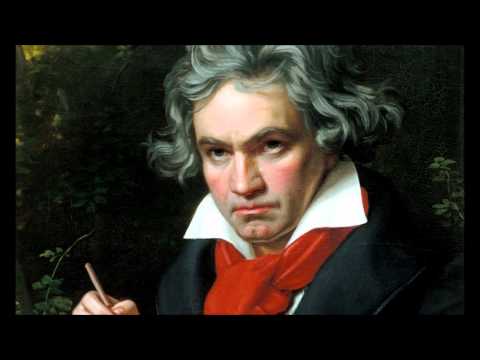




This lesson walks through the key ideas of the unit and then applies them to three works. Start with the Watch & Listen strip above, then read on.
Music's subject matter is feeling. Not specific emotions with names ("sadness," "joy") but the structures and patterns of feeling: tension and release, buildup and resolution, movement and rest. This lesson argues that music reveals these patterns more directly than any other art form because it bypasses representation entirely. A painting of a sad woman shows you sadness. Music enacts the structure of sadness in sound.
Tone is a sound with a definite pitch. Consonance is the pleasing combination of simultaneous tones; dissonance is the tense, unresolved combination. Rhythm is the pattern of sounds in time. Tempo is speed. Melody is a group of notes with a perceivable shape. Theme is a melody that undergoes significant transformation. Motive is the smallest self-contained unit of a theme. Harmony is the simultaneous sounding of tones. Counterpoint is multiple melodies played against each other. Dynamics is loudness and softness.
This lesson presents two theories about how music creates meaning. Formalists argue that music's value lies entirely in its internal structure: the relationships between tones, rhythms, and harmonies. External references are unnecessary. Expressionists argue that music refers to emotions and experiences beyond itself: a minor key sounds sad not because of abstract structure but because it connects to our experience of sadness. This lesson does not resolve this debate but asks you to listen with both frameworks in mind.
Hearing is automatic; listening is a skill. A useful way to practice is to listen to a piece three times. On the first pass, do nothing but follow the overall shape: where does the music start, build, relax, and end? On the second pass, listen for elements. What is the tempo? Is the rhythm steady or does it shift? Does the melody move by small steps or big leaps? When is the music loud or soft? On the third pass, ask what the music seems to express and which choices create that effect.
Listen for repetition and contrast. Almost all music works by saying something, saying it again, and then changing it. Notice when a tune returns, when it is varied, and when something new arrives. Use headphones if you can, close your eyes, and resist the urge to check your phone. Ten minutes of undivided attention to a single piece teaches more than an hour of music playing in the background.
It also helps to keep a few terms ready: tempo (speed), dynamics (loudness), timbre (the color of a sound, which is why a violin and a trumpet playing the same note sound different), and texture (how many layers are sounding at once).
Musical form is the large-scale plan of a piece. Several plans are common. Binary form (AB) has two contrasting sections. Ternary form (ABA) returns to its opening after a contrast, which gives a sense of homecoming. Theme and variations presents a theme and then changes it again and again. Call and response, central to many African and African American traditions, pairs a leader's phrase with an answer.
The pieces in Watch & Listen show the range. Bach's Prelude from his first cello suite is built from a repeating pattern of broken chords, so a single instrument suggests several voices at once and a slow harmonic journey. Beethoven's Fifth develops one tiny motive across a whole movement. Ravi Shankar's raga unfolds from a slow, unmeasured opening toward a fast, rhythmic climax. Louis Armstrong's "What a Wonderful World" is a simple song in which the gravelly warmth of the voice, not complexity of form, carries the feeling. Billie Holiday's "Strange Fruit" depends on contrast between a quiet, beautiful voice and a terrible subject.
When you hear a piece, ask what plan it follows and whether the plan builds expectation, fulfills it, or breaks it.
Supplemental Works
The works below expand on the concepts you just learned. Each one connects to a concept from the lesson and gives you a chance to practice the kind of thinking this unit introduces.
Connects to: Formalism and Expressionism / Theme and Motive / Dynamics
The opening four notes of Beethoven's Fifth are the most famous motive in Western music. That short-short-short-long pattern generates the entire first movement: Beethoven transforms, inverts, extends, and develops it obsessively. The formalist hears this as a masterpiece of structural logic. The expressionist hears it as a musical embodiment of struggle and triumph. Both are right, and neither is complete without the other.
Try this
Listen to the first movement (about 7 minutes). How many times can you hear the opening four-note motive? Does it always appear in the same form, or does Beethoven change it? Describe one specific transformation you notice.
Connects to: Music and Subject Matter / Dynamics / Feeling
"Strange Fruit" is a song about lynching. The "fruit" of the title refers to the bodies of Black Americans hanged from trees in the South. Holiday's performance uses dynamics (she sings softly, almost conversationally, as if describing something ordinary) and phrasing (long pauses between lines, as if each image needs time to register) to create a devastating contrast between the beauty of her voice and the horror of the content. The artistic form does not soften the subject matter. It makes it harder to look away.
Try this
This lesson distinguishes between the subject matter of music (feeling) and the subject matter of a song (the thing the lyrics describe). In "Strange Fruit," how do the musical elements (Holiday's vocal dynamics, the sparse accompaniment, the slow tempo) interact with the lyrical subject matter? Would the same lyrics be as powerful spoken without music?
Connects to: Non-Western Musical Structure / Participation / Tone and Rhythm
Indian classical music works on fundamentally different structural principles from Western music. A raga is not a melody but a framework: a set of notes, ascending and descending patterns, and emotional associations that the performer uses as the basis for improvisation. There is no fixed composition. The music unfolds in real time, often building over 20 or 30 minutes from a slow, meditative opening (alap) to an increasingly rapid and rhythmically complex climax. Shankar's sitar playing demonstrates how structure and improvisation can coexist: the raga provides the rules, and the performer's spontaneous choices within those rules create the content.
Try this
This lesson's vocabulary (melody, harmony, counterpoint) was developed for Western music. How well does it apply to Shankar's performance? What terms would you need to add or modify to describe what you hear?
Unit 10 moves from music to dance. The two are closely related: dance typically uses music as its temporal structure, and many of the elements (rhythm, tempo, dynamics) apply to both. But dance adds the human body as its medium, introducing questions about physicality, gesture, and spatial design that music alone does not raise.
Experience It: Three Passes
Choose one piece from Watch & Listen above and listen to the first three to five minutes three times, as described in the section How to Listen. Headphones help.
- On the first listening, sketch the shape of the music in a line or a few words: where does it start, build, and settle?
- On the second, name two elements you can identify (for example tempo, dynamics, melody, rhythm, or timbre) and describe how each behaves.
- On the third, say what the music seems to express, and name the one choice (a repeated pattern, a change in volume, a silence) that does the most to produce that feeling.