Lesson: Cinema
🎬 Watch & Listen: Cinema




This lesson walks through the key ideas of the unit and then applies them to three works. Start with the Watch & Listen strip above, then read on.
Film's subject matter is complex because film combines so many other art forms: the visual composition of painting, the narrative structure of literature, the performance of theater, the rhythm of music. The camera adds its own dimension: it can move through space, compress or expand time, and show you things no live performance can (a close-up of an eye, a city seen from the air, two events happening simultaneously through cross-cutting).
This lesson introduces the vocabulary of cinematography. Shot types include the establishing shot (distant, setting the scene), close-up (filling the screen with a face or object), long shot (distant figures), tracking shot (camera moves alongside the subject), and crane shot (camera moves vertically). Editing is how these shots are assembled: continuity cuts (smooth transitions that preserve the sense of time flowing), jump cuts (abrupt, disorienting transitions), cross-cutting (alternating between two simultaneous events), and montage (a sequence of images that creates meaning through juxtaposition rather than narrative continuity).
The concept of the auteur holds that the director is the true author of a film, the person whose vision unifies all the elements. This idea emerged from French film criticism in the 1950s and remains influential. This lesson discusses early auteurs like D.W. Griffith and Sergei Eisenstein, who developed the techniques of editing that still shape how films are made.
Every shot in a film is built from decisions. Shot scale ranges from the extreme long shot, where figures are tiny against a landscape, to the close-up, where a face fills the screen. A long shot places a person in a world; a close-up places you inside a feeling. Camera angle tells you how to relate to what you see: a low angle looks up and makes a figure powerful, and a high angle looks down and can make a figure small. Camera movement (pan, tilt, tracking, crane) reveals space and can imitate the way our own attention shifts.
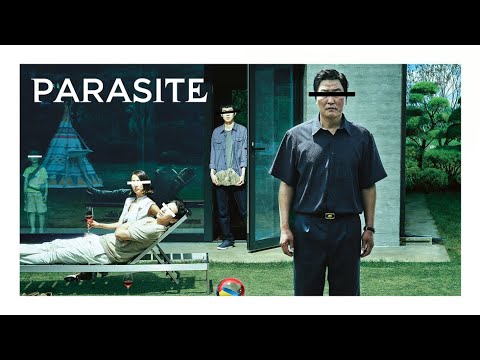
The frame also contains mise-en-scène, a French term for everything placed in front of the camera: sets, costumes, lighting, and the positions of actors. In Parasite, the position of a house on a hill and an apartment half underground is mise-en-scène doing the work of a speech. Add sound, which includes dialogue, music, and effects, and you have the full toolkit.
When you analyze a scene, name the shot scale, the angle, whether the camera moves, and what is in the frame. Then ask what that combination makes you feel and why.
Cinema began as a novelty at the end of the nineteenth century: short films that simply recorded trains, workers, and street scenes. Georges Méliès, a French stage magician, saw that the camera could do more than record; it could create illusions. His A Trip to the Moon (1902), about fifteen minutes long, sends a group of astronomers to the moon in a capsule shot from a cannon, and it lands in the eye of the Man in the Moon.
Méliès built painted sets and used tricks such as stopping the camera, changing something in the scene, and starting again, so that objects seem to appear or vanish. He also hand-colored some prints frame by frame. These inventions were the beginning of special effects. Watch the film in Watch & Listen and notice how much storytelling depends on composition and editing, even without sound or dialogue. Everything later in this unit, from Eisenstein's montage to Welles's deep focus, builds on the idea that a film is made, not merely recorded.
Supplemental Works
The works below expand on the concepts you just learned. Each one connects to a concept from the lesson and gives you a chance to practice the kind of thinking this unit introduces.
Connects to: Montage / Editing / Subject Matter and Content
Eisenstein's seven-minute sequence of tsarist soldiers massacring civilians on the Odessa Steps is one of the most studied sequences in film history. Eisenstein uses montage (rapid cutting between shots of soldiers, fleeing crowds, a baby carriage rolling down the steps, a woman's shattered glasses) to create an experience of chaos, terror, and injustice. No single shot tells the story. The meaning is created entirely by the editing: the juxtaposition of images, the rhythm of the cuts, and the accumulation of visual shock.
Try this
Watch the sequence and count how long the average shot lasts (a few seconds at most). How does the rapid cutting affect your emotional response compared to a single long take of the same event? What does the editing add that a static camera would miss?
Connects to: Cinematography / Shot Types / The Auteur
The opening sequence of Citizen Kane uses a series of dissolves to move toward Kane's mansion, Xanadu. Each shot brings the camera slightly closer, but the light in a single window never changes position. The sequence ends with a close-up of Kane's lips whispering "Rosebud" as he dies. Welles, who was 25 years old when he directed this film, uses deep focus (everything from foreground to background is sharp), unusual camera angles, and long takes to create a visual style that was revolutionary in 1941.
Try this
This lesson introduces the concept of the auteur. Welles wrote, directed, produced, and starred in Citizen Kane. How does that level of control affect the unity of the film? Does a single vision make the artistic form stronger, or can collaboration produce equally unified results?
Connects to: Contemporary Cinema / Architecture in Film / Subject Matter and Content
Bong's Parasite uses architecture as its primary visual metaphor. The wealthy Park family lives in a modernist house at the top of a hill, designed with glass walls, clean lines, and open space. The poor Kim family lives in a semi-basement apartment at the bottom of a slope, prone to flooding. As the Kims infiltrate the Parks' household, the vertical geography of the film (up and down stairs, ascending and descending through the city) becomes inseparable from its subject matter: economic inequality.
Try this
This lesson discusses how architecture reveals values. In Parasite, architecture is not just setting but content. How does the design of the Park house express the family's values? How does the Kim family's basement express theirs? Bong said he designed the Park house specifically for the film. What does it mean for architecture to function as artistic form within another art form?
Unit 13, the final genre unit, examines television and video art. Television shares cinema's medium (the moving image) but differs in structure, distribution, and cultural context. Video art, meanwhile, uses the moving image for purposes that have nothing to do with narrative entertainment. Together, they round out the course's survey of the arts.
Experience It: Count the Cuts
Watch the Odessa Steps sequence in Watch & Listen above. If you can, watch it a second time with a pencil in hand.
- Estimate how long the average shot lasts and how the cutting rhythm changes as the sequence goes on.
- Pick one shot (close-up, long shot, low angle) and say what it makes you feel.
- Eisenstein uses montage to create meaning by juxtaposition. Name two shots that, placed side by side, mean more than either does alone.