Lesson: Theater
🎬 Watch & Listen: Theater

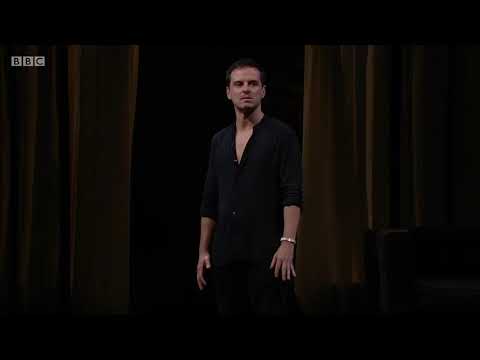


This lesson walks through the key ideas of the unit and then applies them to three dramatic works. Start with the Watch & Listen strip above, then read on.
More than two thousand years ago, Aristotle identified the six elements of drama: plot (the sequence of events), character (the people), diction (the language), thought (the ideas), spectacle (the visual elements), and music (the sound). These categories still apply. When you analyze a play, you are identifying how these six elements work together.
Plot is the most important element for Aristotle. He does not mean simply "what happens." He means the structured arrangement of events that produces rising action, a climax (the moment of recognition or reversal), falling action, and a resolution (denouement). The arrangement matters because it determines the emotional arc of the audience's experience.
Tragedy follows a protagonist of high standing who falls from fortune to misfortune because of a flaw (hamartia) or error in judgment. The fall produces in the audience a combination of pity (for the character's suffering) and fear (that we might make the same mistake). Aristotle called the release of these emotions catharsis.
Comedy moves in the opposite direction: from disorder to order, from confusion to clarity, from isolation to community. Comedies typically end with marriages, reconciliations, or celebrations. This lesson connects these patterns to archetypal cycles: tragedy with autumn (decline), comedy with spring (renewal), romance with summer, and irony with winter.
Modern drama complicates these categories. Tragicomedy blends the two, and many modern plays resist classification entirely. But the archetypal patterns remain useful as a starting point for analysis.
Drama is spoken. Unlike a novel, which can tell you what a character is thinking, a play can only show you what a character says and does. Dialogue (conversation between characters) is the primary vehicle. Soliloquy (a character speaking alone) gives the audience access to inner thought that other characters do not hear.
The quality of the language matters. Shakespeare's characters speak in verse; Wilde's speak in wit; Beckett's speak in fragments. Each choice of diction reveals something about the world of the play and the values it examines. When you do interpretive criticism of a play, paying attention to how characters speak is as important as attending to what they say.
A play is not finished until an audience is in the room. The same script feels different on a bare stage than in a large theater with scenery, because the space shapes what the actors can do. In a proscenium theater, the audience sits on one side and looks through a frame, as if watching a picture. On a thrust stage, the audience surrounds three sides, which makes scenes feel more intimate. In a theater in the round, the audience surrounds the stage entirely, so no actor can face everyone at once. Shakespeare's Globe was a thrust stage with the audience standing in the open air; many ancient Greek theaters were large open-air semicircles that held thousands.
Directors also arrange where actors stand and move. This arrangement is called blocking. A character who stands alone downstage (near the audience) feels exposed; two characters who never get close feel separated even if they speak warmly. When you watch a filmed play, notice the blocking as well as the words.
Finally, theater is live. Actors adjust to the audience's laughter or silence, and no two performances are identical. That unrepeatable exchange is part of why a play can feel so different from the same story read alone.
One of the most famous soliloquies in theater begins "To be, or not to be, that is the question." Hamlet is alone, or believes himself alone, and the audience becomes the only listener to his reasoning. The speech weighs the value of living against the release of death, and it does so as an argument: Is it nobler to endure suffering or to end it? What stops us from ending it? The answer, that we fear what comes after death, makes "conscience" (fear and reflection) into a cause of inaction.
Look at the elements of drama at work. The diction is plain and abstract ("to sleep, perchance to dream"), turning grand questions into short phrases. The thought is a chain of reasoning in which each step answers the one before. The character is revealed by what Hamlet chooses to say aloud when no one else can hear. And the actor's performance, whether quiet and intimate or large and angry, makes the same words mean different things. Compare the two Hamlet performances in Watch & Listen: the lines are identical, but the content differs.
Supplemental Works
The works below expand on the concepts you just learned. Each one connects to a concept from the lesson and gives you a chance to practice the kind of thinking this unit introduces.
Connects to: Tragedy / Plot / Catharsis
YouTube embed for a production or lecture on Oedipus:
Sophocles' Oedipus Rex is this lesson's primary example of tragedy, and with good reason. Oedipus is king of Thebes, a capable and intelligent ruler, who sets out to discover who murdered the previous king and thereby caused a plague on the city. The investigation leads, step by step, to the revelation that Oedipus himself is the murderer, that the man he killed was his father, and that the woman he married is his mother.
The plot is an almost perfect demonstration of Aristotle's principles. The rising action builds through a series of witnesses and revelations. The climax is the moment of recognition: Oedipus sees the truth. The reversal is total: the detective discovers that he is the criminal. The hamartia is not a moral failing but a relentless commitment to knowing the truth, a quality that is admirable in every other context. That is what makes the play tragic rather than merely unfortunate.
Try this
Aristotle says tragedy produces catharsis: a purging of pity and fear. When Oedipus blinds himself at the end of the play, what is the audience supposed to feel? Is it pity for Oedipus, fear that the same could happen to us, or something else?
Connects to: Modern Tragedy / Character / Archetypal Patterns
Miller's play asks whether tragedy is possible for an ordinary person. Willy Loman is not a king or a hero. He is an aging traveling salesman in postwar America who has spent his life believing that personal charm and being "well-liked" would guarantee success. It hasn't. His career is failing, his sons have not become the men he imagined, and his memories of the past keep bleeding into the present.
This lesson's Aristotelian framework still applies, but with adjustments. Willy's hamartia is his refusal to see reality: he clings to a version of the American Dream that was always a fantasy. The recognition (if it comes at all) is partial and ambiguous. The catharsis is complicated by the fact that Willy is not admirable in the way Oedipus is; he is stubborn, dishonest, and self-deceiving. And yet Miller insists that his suffering matters, that attention must be paid to ordinary people's failures as much as to a king's fall.
Try this
Is Willy Loman a tragic hero in Aristotle's sense? Does the play produce catharsis? Miller argued that tragedy could be written about ordinary people. This lesson's framework was designed for kings and heroes. Who is right, and does the play itself settle the question?
Connects to: Musical Theater / Diction / Comedy and Tragedy
Hamilton tells the story of Alexander Hamilton, one of America's founding fathers, using hip-hop, R&B, and traditional musical theater forms. The casting deliberately uses actors of color to play the white historical figures. The diction is contemporary: the characters rap, sing, and speak in modern idioms.
This is a useful work for testing this lesson's categories. Is Hamilton a tragedy or a comedy? It has elements of both: the rise-and-fall arc of Hamilton's career is tragic (he dies in a duel), but the show's energy, wit, and ensemble numbers are comic in structure. The archetypal pattern is complex: it moves through summer (revolution), autumn (political decline), and winter (death) without a clear spring of renewal, though the final number attempts one.
The diction is the most distinctive formal choice. Miranda uses hip-hop not as novelty but as the language best suited to expressing Hamilton's relentless ambition, speed of thought, and need to be heard. The form of the language is inseparable from the content.
Try this
This lesson says diction reveals the world of the play. How does Miranda's use of hip-hop change the content of Hamilton's story compared to how a traditional Broadway musical or a spoken drama would tell it?
Unit 9 moves from the stage to music. Theater often includes music, but Unit 9 treats music as an independent art form with its own vocabulary: tone, rhythm, melody, harmony, dynamics. The challenge will be to apply the same analytical attention you have been giving to visual and literary works to an art form that exists entirely in sound.
Experience It: Two Hamlets
Watch the two Hamlet soliloquies in Watch & Listen above (the Globe and Andrew Scott), listening to the first minute of each. Then answer.
- Write down three differences you notice: in voice, speed, movement, or the relationship to the audience.
- The words are the same. What does each performance make Hamlet seem to feel: grief, calm, anger, exhaustion?
- Which element of drama (diction, character, thought, spectacle) changes most between the two, and why does that matter for what the speech means?