Reflection Prompt
The Elements of Painting
How Van Gogh's treatment of one element changes what the night sky means
This unit introduces the elements of painting: line, color, texture, and composition. Van Gogh's The Starry Night uses all four in distinctive ways. The lines are not smooth or controlled; they swirl and pulse. The colors are intense and unrealistic (the sky is not actually that shade of blue). The texture is heavy, with visible brushstrokes that create ridges on the surface. The composition moves the eye in circular patterns rather than leading it to a single focal point.
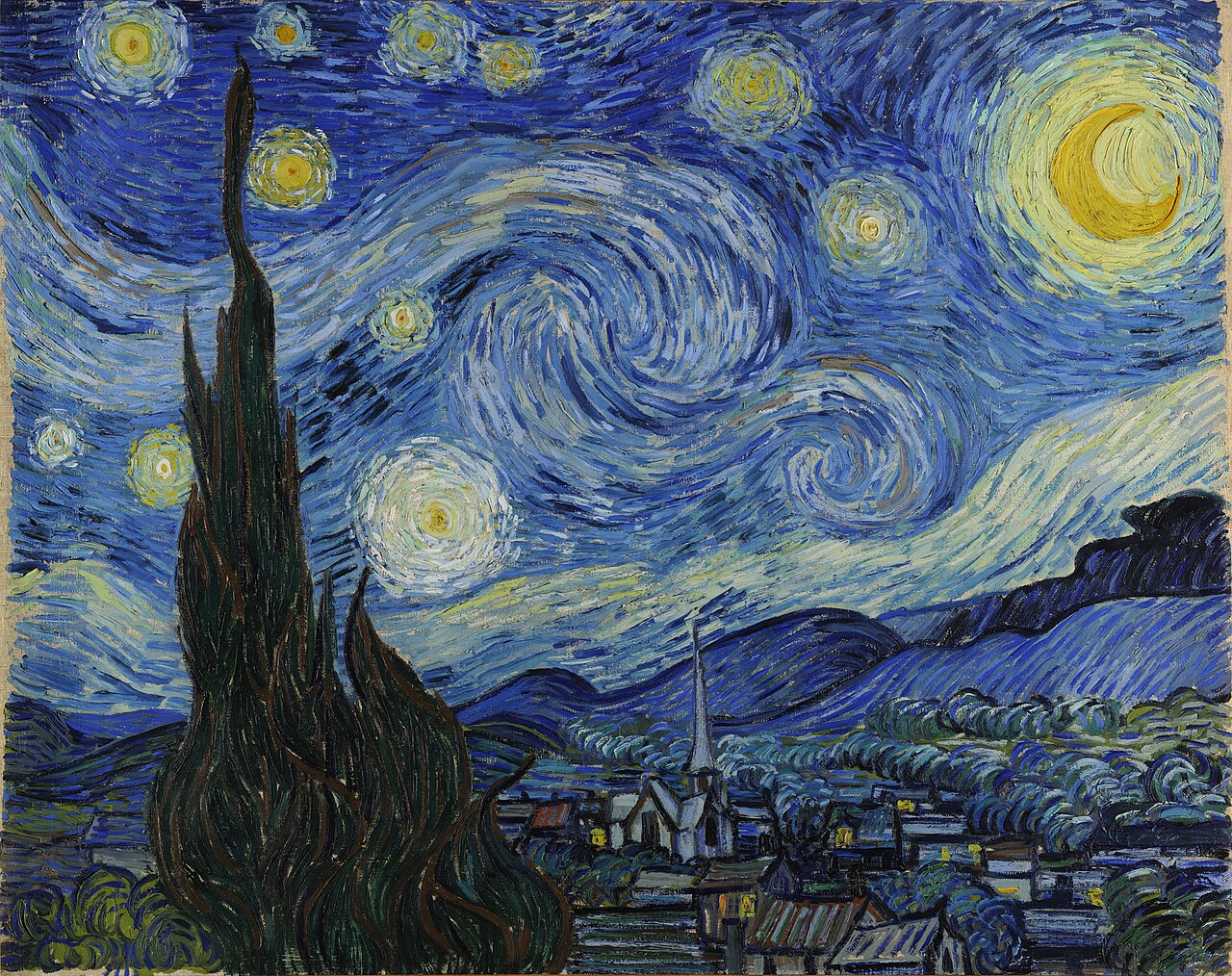
Vincent van Gogh, The Starry Night, 1889. Oil on canvas, 73.7 × 92.1 cm. Museum of Modern Art, New York. Public domain (image from Wikimedia Commons).
The prompt
Choose one element (line, color, texture, or composition) and describe how Van Gogh uses it in this painting. Then explain how that element contributes to the painting's content, not just its subject matter. What does Van Gogh's treatment of that element communicate about the night sky that a more conventional approach would not?
Be specific. "The brushstrokes are powerful" is not yet a description; say where they are, what direction they run, and what they do to your eye. If a classmate chose a different element, would their reading of the painting's content agree with yours?
Your Reflection
This is a thinking space — your response is not saved or submitted. Copy your work if you want to keep it.