Lesson: Dance
🎬 Watch & Listen: Dance



This lesson walks through the key ideas of the unit and then applies them to three works. Start with the Watch & Listen strip above, then read on.
Dance uses the human body as its medium and motion as its material. The subject matter can be abstract (pure movement and pattern), emotional (feelings expressed through gesture), or narrative (a story told through choreography). This lesson emphasizes that feeling is dance's most fundamental subject matter: the body communicates emotional states more directly than words.
Dance has ancient roots in ritual. This lesson traces a path from ceremonial dances (rain dances, harvest dances) through court dance and ballet to modern and contemporary forms. Ballet uses a codified vocabulary of movements (arabesque, bourrée, relevé) and typically follows a pretext (a story). Modern dance, pioneered by Isadora Duncan, Martha Graham, and others, rejected ballet's formalized movements in favor of natural, expressive motion rooted in breath, weight, and the floor.
Hip-hop, tap, jookin, and ballroom dance are all forms of popular dance that this lesson recognizes as part of the art form's living tradition. Contemporary choreographers often blend traditions: ballet technique with modern dance philosophy, or street dance vocabulary with concert stage structure.
Dance can be described with four questions. Body: which parts of the body lead, and what shapes does it make: curved or straight, open or closed, grounded or lifted? Space: where do the dancers go on the stage, and how do they use direction, level (high, middle, low), and the distances between them? Time: what is the tempo and rhythm of the movement, and does it follow the music or fight it? Energy: is the movement sharp or smooth, heavy or light, sustained or sudden?
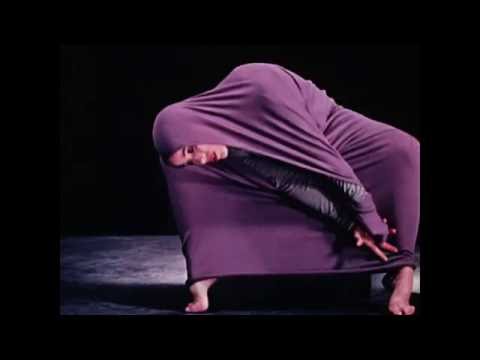
Notice how different dances answer these questions. Martha Graham's Lamentation keeps the body in a small space and stretches fabric into angular shapes: tight space, strong energy, no music with a melody. Alvin Ailey's Revelations fills the stage with groups, lines, and circles and moves from heavy, earthbound motion to soaring lifts. In Gene Kelly's Singin' in the Rain the body, space, time, and energy of tap, an umbrella, and a puddle turn a rainy street into a place of joy.
When you describe a dance, give one detail for each of the four questions. Then ask how they combine to express a feeling.
Most dances are made with music, but the relationship varies. Some choreographers move exactly with the beat; others deliberately move against it. Some dances use silence. Ailey's Revelations grows from African American spirituals, and Pina Bausch's Café Müller sets its restless, falling bodies against slow, sorrowful Baroque music. The same music can mean something different when the body answers it differently.
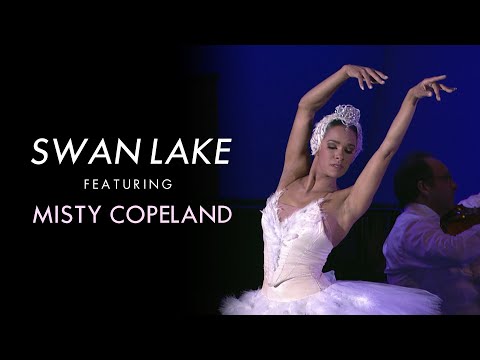
Place matters too. A ballet such as Swan Lake is designed for a proscenium stage and a large orchestra, and it depends on trained bodies, pointe shoes, and an old tradition of storytelling. Social dance, such as ballroom, tap, or hip-hop, grows out of streets, clubs, and communities, and often invites the audience to join in. Both are dance; they ask different things of the dancer and of the viewer.
When you meet a new dance, ask who made it, for whom, and in what place. The answers explain a great deal about its form.
A dance exists only while it is being danced, which makes it the most fragile of the arts. A painting hangs on a wall for centuries; a dance has to be passed from body to body. Choreographers make dances in rehearsal with dancers, shaping phrases, trying them again, and cutting what does not work. Some choreographers arrive with a plan; others build a dance out of the dancers' own improvisations.
To keep a dance alive, companies rely on several kinds of memory. Dancers who performed a work teach it to the next generation, so a gesture can travel through decades. Video records a performance but not the full intention behind it. Systems of notation, such as Labanotation, developed by Rudolf Laban in the early twentieth century, write movement down on paper with symbols for the body, direction, and timing. Companies such as Martha Graham's, founded in 1926, and the Alvin Ailey American Dance Theater, founded in 1958, keep their founders' works alive by teaching and rehearsing them continually.
This fragility has consequences for how we look. When you watch a recording of a dance, remember that you are seeing one performance of a work that exists in many versions, each by different bodies. Ask what is constant across performances, such as the structure, the spatial pattern, and the movement vocabulary, and what changes with each dancer.
Supplemental Works
The works below expand on the concepts you just learned. Each one connects to a concept from the lesson and gives you a chance to practice the kind of thinking this unit introduces.
Connects to: Modern Dance / Feeling as Subject Matter / Form
Graham performs seated on a bench, enclosed in a tube of stretchy fabric. She never stands. The dance consists entirely of the body pressing against the fabric, stretching it into angular shapes that suggest grief without illustrating any specific event. The fabric becomes a second skin that both contains and reveals the body's anguish. This is modern dance at its most concentrated: no story, no character, no music with a melody, just the structure of sorrow made visible through the body.
Try this
Graham said she was not interested in depicting sorrow but in showing what sorrow does to the body. What is the difference between those two goals? How does the fabric function as part of the dance's artistic form?
Connects to: Dance and Narrative / Ritual / Music and Dance
Ailey's Revelations is set to African American spirituals and gospel music and is structured in three sections: "Pilgrim of Sorrow" (struggle), "Take Me to the Water" (baptism and purification), and "Move, Members, Move" (celebration and joy). The dance moves from earth-bound, weighted movement to soaring, joyful lifts. It connects modern dance to its roots in ritual and community celebration. The relationship between the music and the choreography is inseparable: the dancers' movements grow directly from the rhythms and emotions of the spirituals.
Try this
Watch the "Wade in the Water" section. How does Ailey use the dancers' spatial arrangement (lines, circles, clusters) to create the sense of a baptismal ritual? How does this differ from the individual, isolated movement in Graham's "Lamentation"?
Connects to: Contemporary Dance-Theater / Participation / Repetition
Bausch's Café Müller is performed in a space filled with chairs and tables. The dancers move with closed eyes, stumbling into furniture, falling, being caught and repositioned by others, then falling again. The repetition of these falls and catches is relentless. There is no narrative in the conventional sense, but the accumulation of repeated gestures builds a powerful emotional content: the difficulty of human connection, the compulsion to keep reaching for contact despite repeated failure.
Try this
Bausch uses repetition as a primary structural element. This lesson says repetition is one of the most important features of dance form. Watch the opening minutes and count how many times a specific gesture is repeated. What effect does the repetition have on you as a viewer? Does it become boring, or does it intensify?
Unit 11 moves from the performing arts back to a visual medium: photography. Like painting, photography creates flat images. But unlike painting, photography records the world mechanically. The question of whether that mechanical recording process can produce art is the central tension of the unit.
Experience It: Four Questions, One Dance
Watch the first two minutes of Martha Graham's Lamentation in Watch & Listen, with the sound on.
- Body: which parts of the body move and what shapes do they make?
- Space and time: how much of the stage is used, and how fast does the movement happen?
- Energy and meaning: describe the quality of the movement in two words, and say what feeling it expresses and how the fabric helps.