Lesson: What Is a Work of Art?
🎨 Gallery: What Is a Work of Art?
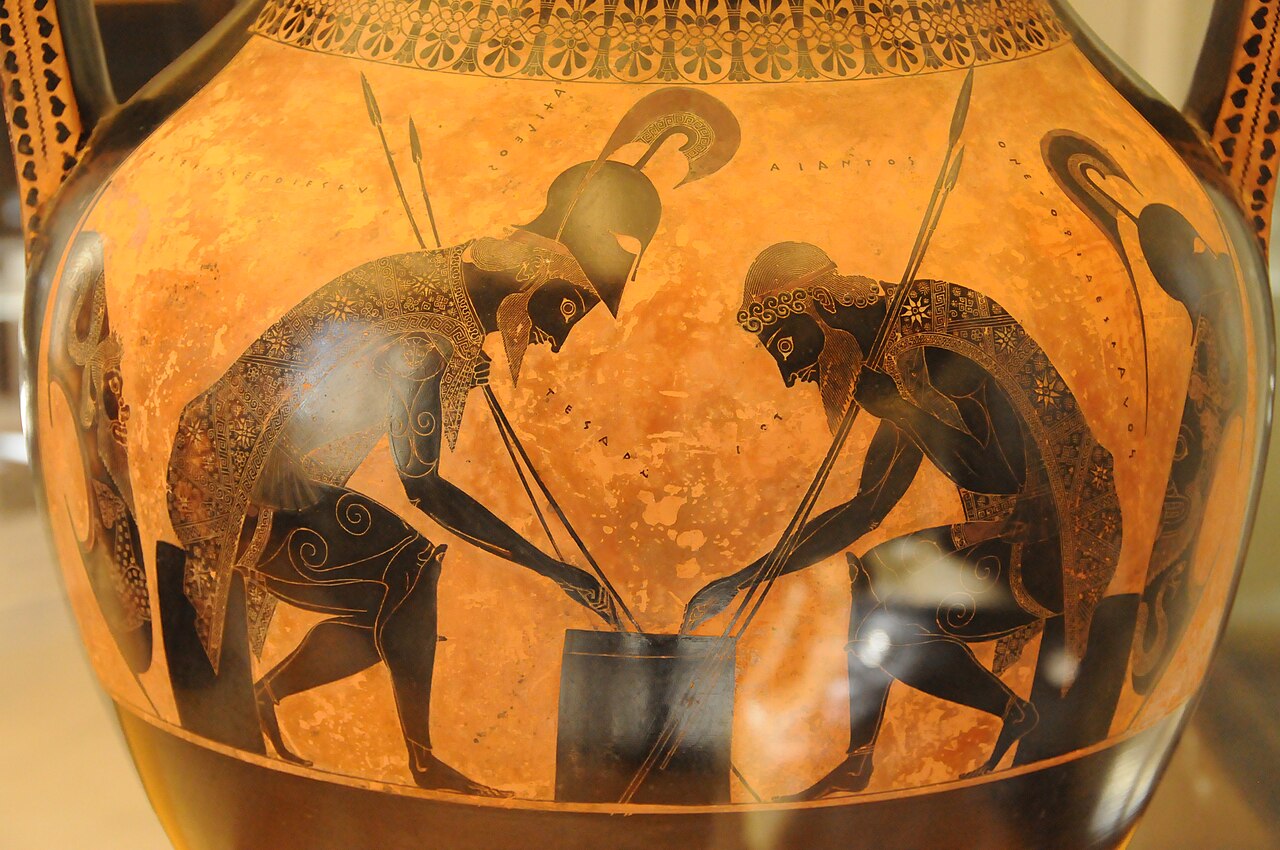
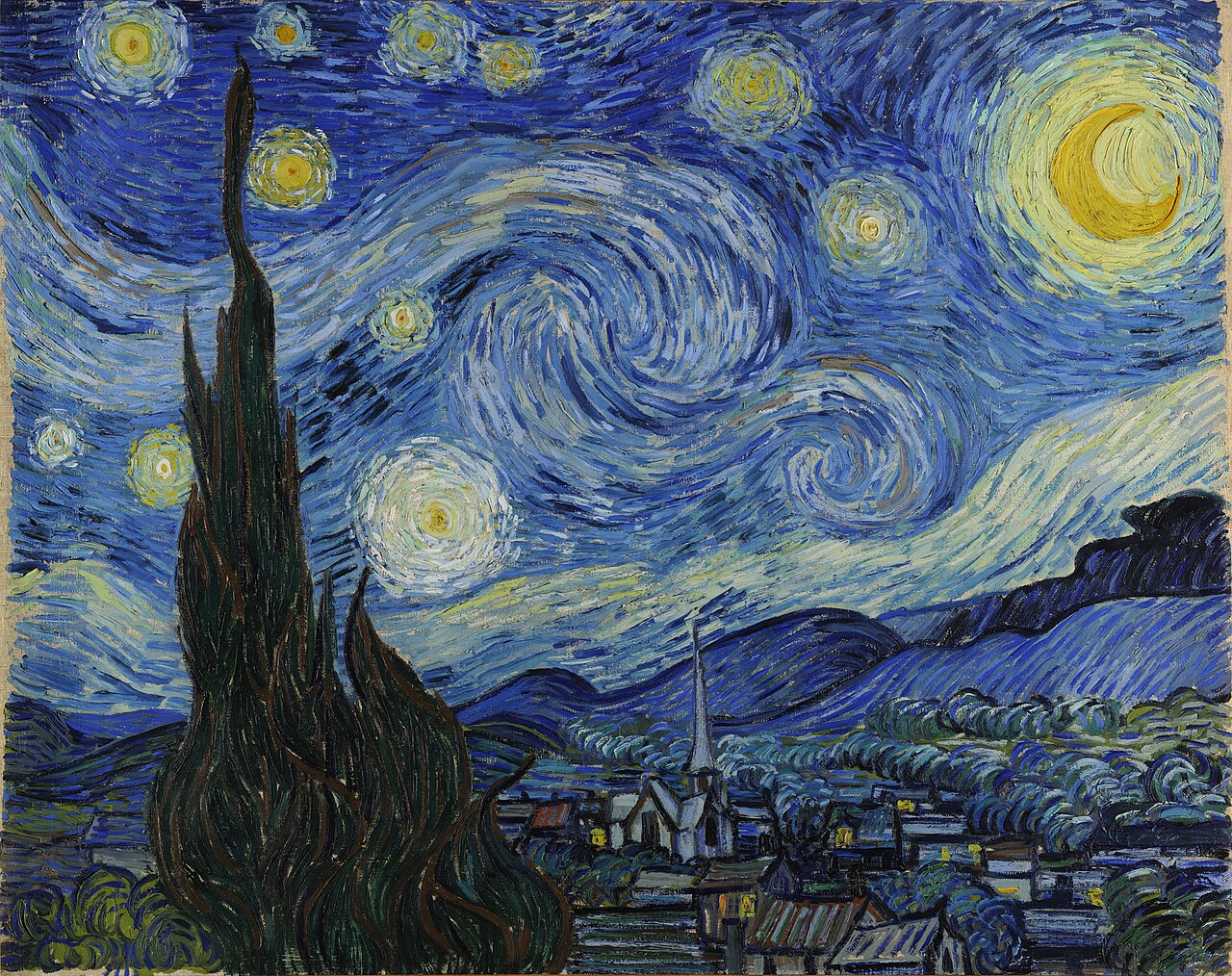
This lesson walks through the key ideas of the unit and then applies them to three works of art. Start with the Gallery above, then read on.
"Work of art" is one of those phrases everyone uses and no one can define precisely. This lesson is honest about this difficulty. There is no single definition that covers every case. But there are three criteria that most people agree on when they try to identify something as art conceptually (that is, by thinking about what kind of thing it is):
1. The object or event was made by an artist.
2. The object or event was intended to be a work of art.
3. Recognized experts agree that it is a work of art.
These criteria sound reasonable, but they run into trouble quickly. This lesson uses Marcel Duchamp's Fountain (1917) to test them.
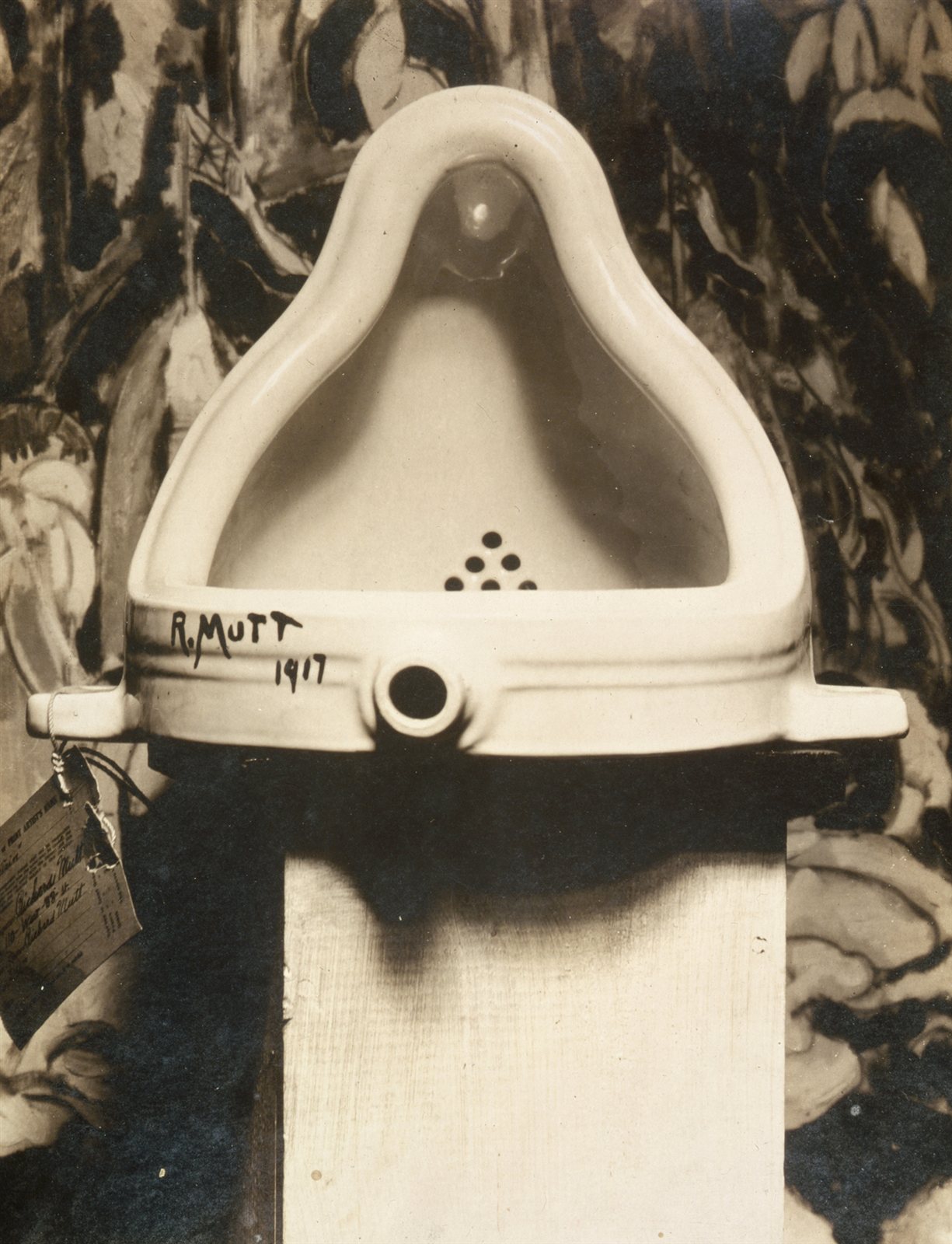
Marcel Duchamp, Fountain, 1917 (replica 1964). Porcelain. Tate, London.
Duchamp took a mass-produced urinal, turned it on its back, signed it "R. Mutt," and submitted it to an art exhibition. He did not make it in any traditional sense. Its "artistry" consists entirely of the decision to reframe a factory object as art. Yet today, Fountain is widely considered one of the most important artworks of the twentieth century. Experts agree it is art. But does it satisfy criteria 1 and 2 in any meaningful way? These are the kinds of boundary cases that make the question "what is art?" so productive. The criteria help, but they do not settle every case.
The conceptual approach asks: what kind of thing is this? The perceptual approach asks a different question: what does this thing do when I actually look at it, listen to it, or experience it? This lesson makes a clear distinction here. Perception is what we can observe directly. Conception is what we know or think we know, based on categories and prior knowledge.
When you identify art perceptually, you are attending to the work itself rather than to ideas about it. And what you are looking for are four artistic qualities. These are the four terms you will use for the rest of the course:
Key Terms
Artistic form: the organization of a medium (paint, sound, stone, words) that clarifies some subject matter.
Participation: the experience of giving a work of art your full, sustained attention, to the point where you lose awareness of yourself as a separate observer.
Subject matter: any aspect of human experience that is of vital interest: a value. Subject matter is never presented raw in a work of art; it has been transformed by form.
Content: the interpretation of subject matter as revealed by artistic form. Content is meaning that is fused into the form itself.
These four concepts are related, and they depend on each other. The sections below take them one at a time.
Everything has form in the most basic sense: objects and events occupy space and time, and their parts are arranged in some way. But not every arrangement counts as artistic form. This lesson is specific about the difference. Artistic form is an arrangement in which line, color, texture, shape, and space have been unified for the most powerful effect possible. The key word is unified. In a work of art with strong form, every part contributes to the whole. Nothing is random or incidental.
This lesson tests this idea by comparing two images that share the same subject (execution) but handle it very differently: Eddie Adams's photograph Execution in Saigon (1968) and Francisco Goya's painting The Third of May 1808 (1814).
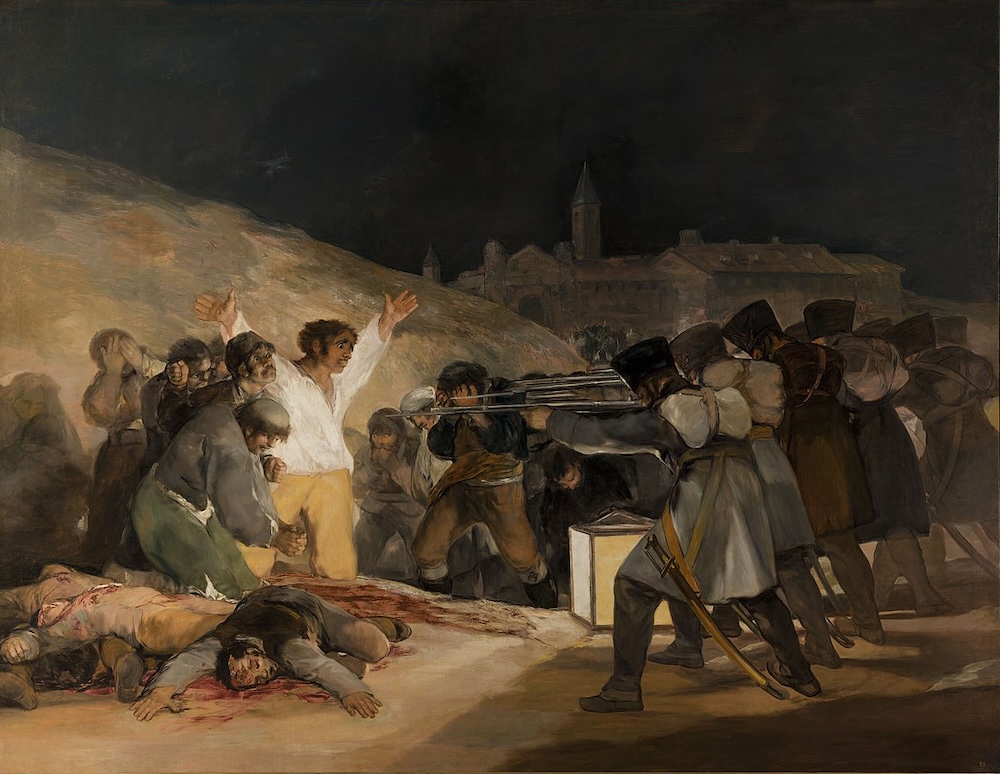
Francisco Goya, The Third of May 1808, 1814. Oil on canvas, 268 × 347 cm. Museo del Prado, Madrid.
Both depict a moment just before death. But Goya's painting has been composed: the central figure in white is lit dramatically, the firing squad is faceless, and every line in the painting pushes the viewer's attention toward the moment of violence. Adams's photograph, taken in the chaos of the Vietnam War, captures a real execution with shocking immediacy, but it includes random details (background figures, street clutter) that a painter would have removed. This lesson's point is that both images are powerful, but Goya's has stronger artistic form because every element serves the whole.
This does not mean the photograph is not art. It means that artistic form is a matter of degree, and recognizing the degree of form is one of the skills this course teaches.
Participation is one of the most important ideas in this unit, and it describes something you have probably experienced without having a name for it. You are reading a novel and you forget where you are. You are listening to a piece of music and your sense of time disappears. You are looking at a painting and you stop noticing the wall around it. This lesson calls this a participative experience: a communion with a work of art so full that it enriches your life.
Participation is not passive. It requires giving the work your undivided, sustained attention. But it also requires that the work have enough pull to hold that attention. Weak form lets your mind wander. Strong artistic form draws you in and keeps you there. This is why artistic form and participation are so closely linked: form is what makes participation possible.
This lesson uses Cézanne's Mont Sainte-Victoire to illustrate this point.
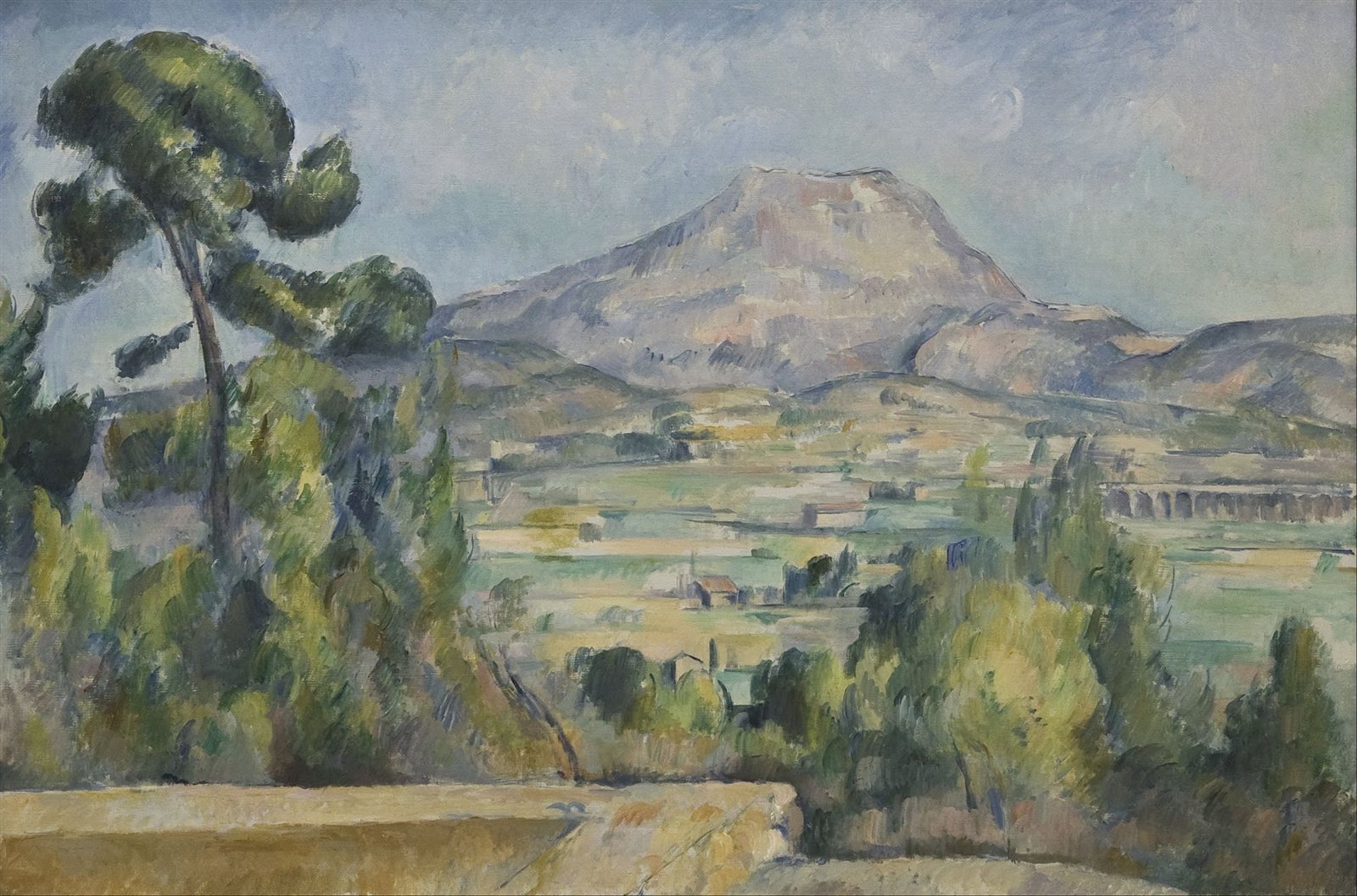
Paul Cézanne, Mont Sainte-Victoire, 1886–1887. Oil on canvas, 59.7 × 72.4 cm. The Phillips Collection, Washington, D.C.
When you participate with this painting, you are not making geological observations about the mountain. You are not classifying its style or recalling its background information. You are seeing Cézanne's mountain: the patches of color, the way the brushstrokes build the surface, the relationships between the sky and the land. The moment you start treating the painting as an instance of a category ("Impressionism," "landscape," "French"), the vivid specificity of the painting fades. Participation means staying with the work itself.
Subject matter and content sound like they mean the same thing, but this lesson draws a careful line between them. Subject matter is the value or human interest that a work of art addresses: war, love, death, beauty, injustice. Content is what happens when artistic form interprets that subject matter. Content is meaning that has been shaped and made visible by the form of the work.
Here is the critical point: subject matter is never presented directly in a work of art. It is always transformed by form. A painting of a war is not the same thing as a war. The painting selects, arranges, and focuses. What you experience when you look at the painting is not the raw event but the event as interpreted through the artist's compositional choices. That interpretation is the content.
This lesson demonstrates this with Roy Lichtenstein's Hopeless (1963), which takes a panel from an anonymous comic strip and transforms it into a large-scale painting. The subject matter (a woman crying over a failed relationship) is the same in both versions. But Lichtenstein changes the form: he simplifies the hair, smooths the skin tones, adds the fingers, and removes the background. Those changes alter the content. The Lichtenstein version communicates something more focused and more emotionally direct than the original cartoon, even though they depict the same scene.
When this lesson talks about "form-content," it means the fusion of these two things. In a strong work of art, you cannot separate what the work means from how it is made. The meaning is in the form.
Supplemental Works
The works below expand on the concepts you just learned. Each one connects to a concept from the lesson and gives you a chance to practice the kind of thinking this unit introduces.
Video: Ai Weiwei discusses Sunflower Seeds at the Tate Modern, 2010. Source: Tate / YouTube.
Connects to: Identifying Art Conceptually
In 2010, the Chinese artist Ai Weiwei filled the vast Turbine Hall at the Tate Modern in London with 100 million porcelain sunflower seeds. Each seed was individually hand-sculpted and hand-painted by artisans in the city of Jingdezhen, China's historic center for porcelain production. The process took over two years and involved roughly 1,600 workers.
Now apply this lesson's three criteria. Was this work made by an artist? Ai Weiwei conceived it, but he did not make the seeds himself. Sixteen hundred artisans did, each painting individual seeds by hand. Is the artist the person with the idea or the person who does the physical labor? Was it intended as art? Ai Weiwei certainly intended it as art, but it is also a political statement about mass production, individuality, and the history of Mao's China (sunflowers were a symbol of the people's devotion to the Communist leader). Can something be both political commentary and a work of art? Do recognized experts agree? Yes, the Tate commissioned and exhibited it. But when visitors originally walked on the seeds, the museum closed the installation over health concerns about porcelain dust. Does the way an institution handles a work change what it is?
None of these questions have simple answers, and that is the point. Sunflower Seeds is the kind of work that pushes the three criteria to their limits, much as Duchamp's Fountain did a century earlier.
Try this
Apply the three criteria for identifying art to something in your daily life that is not usually considered art: a well-designed building, an advertisement, a meal. How many criteria does it meet? Where does it fall short? What does that tell you about the boundaries of "art"?
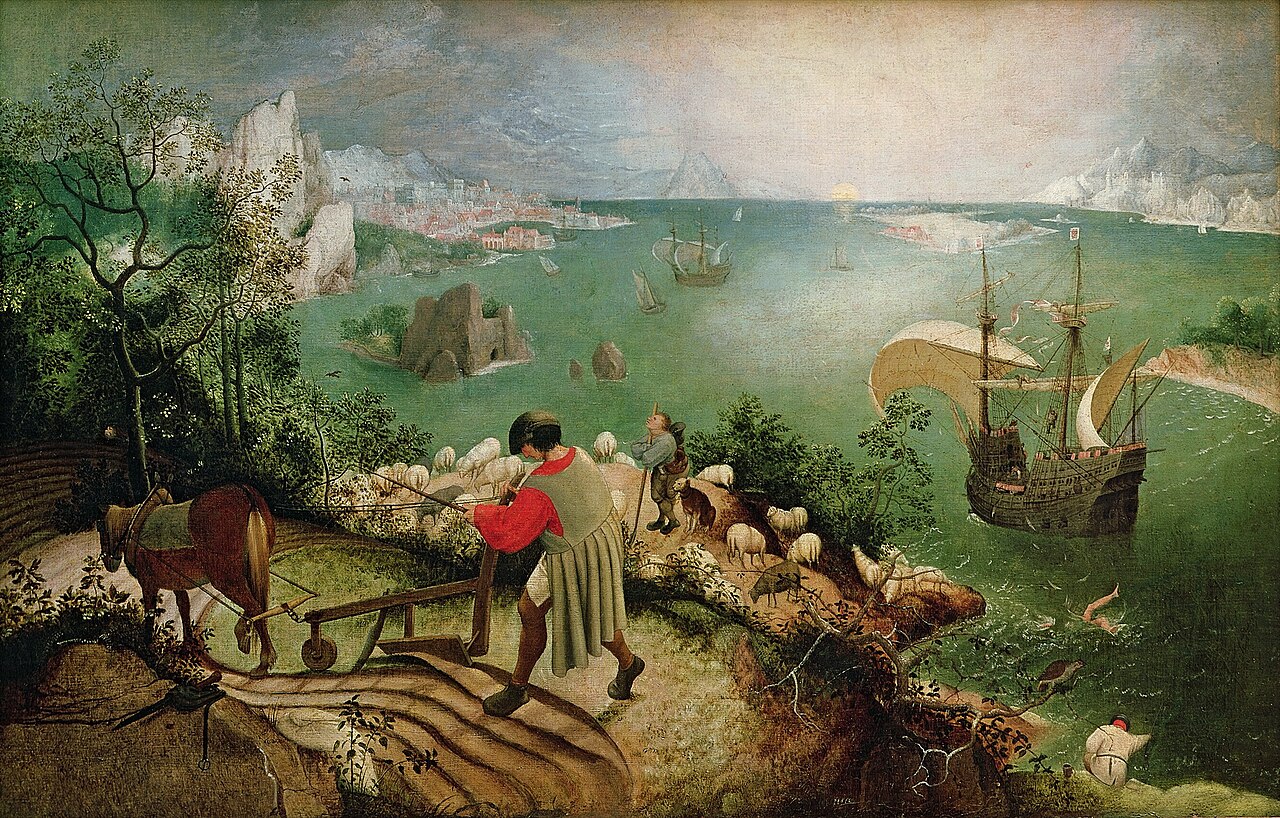
Pieter Bruegel the Elder (attributed), Landscape with the Fall of Icarus, c. 1560. Oil on canvas, 73.5 × 112 cm. Royal Museums of Fine Arts of Belgium, Brussels. Public domain.
Connects to: Subject Matter and Content
At first glance, this looks like a peaceful landscape. A ploughman works his field in the foreground. A shepherd tends his flock on a hill. Ships sail calmly in a harbor. The light is warm. Nothing seems wrong.
Then you notice the legs. In the lower right corner of the painting, two small legs stick out of the water. They belong to Icarus, the figure from Greek mythology who flew too close to the sun on wings made of wax and feathers. The wax melted, and he fell into the sea. In Bruegel's version, nobody notices. The ploughman keeps ploughing. The shepherd stares at the sky but not at the drowning boy. The ship sails on.
This is a perfect case for this lesson's distinction between subject matter and content. The subject matter is suffering, specifically the suffering of Icarus. But the content, shaped by Bruegel's formal choices, is something different: it is about indifference. By making Icarus tiny and peripheral while filling the painting with people going about their business, Bruegel uses artistic form to say something the myth alone does not say. The world does not stop for your tragedy. Life goes on around you whether you are drowning or not.
Notice that the content is not stated anywhere in the painting. There is no caption, no label, no written message. The meaning is entirely in the form: in the scale, the placement, and the relationship between the figures. That is what this lesson means when it says content is meaning fused into form.
Try this
Look at the painting again and identify every figure in it. Who is doing what? How does the size and placement of each figure contribute to the painting's content? What would change if Bruegel had painted Icarus large and central, with the ploughman small in the background?
Video: James Turrell's Twilight Epiphany at Rice University, Houston. Source: KHOU / YouTube.
Connects to: Participation
This work is in Houston, on the Rice University campus, and it is free to visit. Twilight Epiphany is a "skyspace" by the American artist James Turrell: a grass-covered pyramidal structure with an aperture in the ceiling that frames a square of sky. Visitors sit on granite benches inside while LED lights slowly shift color across the white ceiling. The light sequence runs at sunrise and sunset, and lasts about 40 minutes.
There is nothing to look at in the traditional sense. No painting, no sculpture, no object. The "work" is the experience of sitting still and watching light and sky change together. Your perception shifts in ways you do not expect: the sky appears to change color (it hasn't), the aperture seems to flatten into a solid plane (it hasn't), and your sense of time slows down.
This is participation in its purest form. Turrell's skyspace does not represent something else. It does not tell a story or make an argument. It creates the conditions for the exact experience this lesson describes: sustained, undivided attention to a work that holds you so fully that you lose awareness of yourself as a separate observer. If you have ever wondered what this lesson means by "participative experience," this is the clearest example you will find, and it is a short drive from campus.
Try this
Think of a time you had a participative experience with a work of art: a song, a film, a painting, a performance. What held your attention? Was it the subject matter, or was it something about the form (the sound, the composition, the pacing)? How long did the experience last, and what made it end?
You now have a working vocabulary for talking about art: artistic form, participation, subject matter, and content. These four terms give you a way to move beyond "I like it" or "I don't like it" and say something more precise about what a work of art is doing and how it does it.
In Unit 3, you will put these tools to work. The unit introduces three types of criticism (descriptive, interpretive, and evaluative) that give you a structured method for analyzing any work of art in any medium. Think of Units 1 and 2 as building the vocabulary and Unit 3 as teaching you the grammar.
Experience It: The Fall of Icarus
Open the Bruegel painting in the Gallery above and give it a full two minutes before you read the prompts. Resist the urge to look for the story straight away.
- Write down the first three things you notice. Where did your eye land first, and where did it go next?
- Find Icarus. How much of the painting does his suffering take up, and what is the rest of the painting doing instead?
- Complete this sentence: "The subject matter of this painting is ___, but its content is ___." Name one formal choice (scale, placement, light) that leads you to your answer.
Further Exploration
- Smarthistory: Marcel Duchamp, Fountain, a video and essay on why a urinal sparked a debate about art
- Smarthistory: Goya, The Third of May 1808, an essay and video on a painting that treats a massacre as a work of art
- Wikipedia: Conceptual art, an overview of art in which the idea matters more than the object