Master Morality, Slave Morality, and the Revaluation of Values
On the Genealogy of Morality, First Treatise
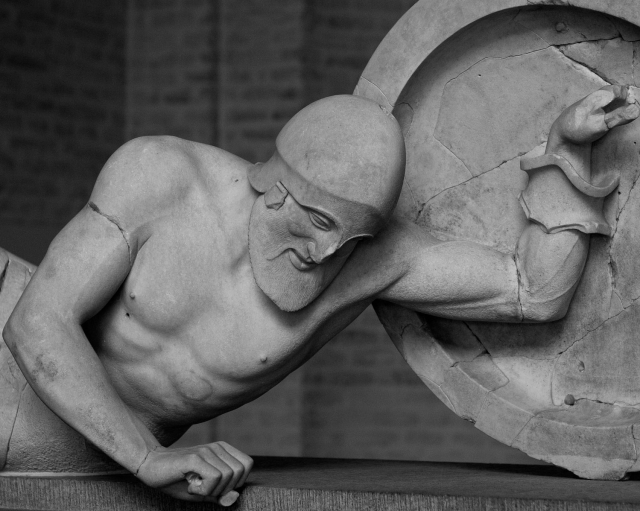
The First Treatise is where the argument begins in earnest. Nietzsche is going to claim that the moral concepts we use most confidently have origins we would find deeply uncomfortable.
Nietzsche's opening move in the First Treatise is to distinguish two historically distinct moral vocabularies, which he calls "good/bad" and "good/evil." These are not two versions of the same thing. They are, Nietzsche claims, fundamentally different ways of organizing the moral landscape, with different origins, different psychological structures, and different implications.
The good/bad vocabulary belongs to what Nietzsche calls master morality. It originated, he argues, with the aristocratic, warrior, ruling classes of ancient societies. In this vocabulary, "good" is a term of self-description. The powerful call themselves good: strong, vital, noble, excellent, life-affirming. "Bad," the opposite term, simply describes what the powerful are not: weak, lowly, common, without distinction. The crucial thing to notice is that "bad" in this vocabulary carries no moral condemnation. To call someone "bad" in the good/bad sense is like calling them inferior or unimpressive; it is a social and aesthetic judgment, not a moral denunciation. The powerful do not hate the weak; they barely notice them.
The good/evil vocabulary is structurally different. Here, "good" describes the humble, the suffering, the self-denying, the meek. And "evil" describes not a social inferior but a moral enemy: the powerful, the strong, the life-affirming. This vocabulary did not emerge from self-affirmation. It emerged from its opposite.
The difference in structure matters. Master morality begins with "we are good" and derives "they are bad" as an afterthought. Slave morality begins with "they are evil" and derives "we are good" as a reaction. This reactive, negating structure is what Nietzsche means when he says slave morality is born of ressentiment.
Nietzsche uses the French word ressentiment rather than the English "resentment" because he means something more specific. Ordinary resentment is a reaction to perceived injustice that can motivate change. Ressentiment, in Nietzsche's sense, is a chronic condition of the impotent: the inability to act out hostility directly, combined with an ongoing internal festering of that hostility. The weak cannot overcome the strong by force, so the hostility turns inward and is transformed, over time, into something that looks like a moral system.
The slave revolt in morality is the moment when this transformation completes itself. Nietzsche's account of how it happened runs something like this: the oppressed, unable to match the powerful in strength, developed a compensatory strategy. They redefined what counts as valuable. Strength became evil; suffering became ennobling; humility became virtue; pride became sin. The entire value system of the powerful was inverted. And because this inversion was successful, because it spread and took root and eventually came to dominate Western moral consciousness, what had been the self-affirmation of the powerful became defined as evil, and what had been the weakness of the oppressed became defined as good.
Nietzsche associates this revolt primarily with the priestly class, and specifically with what he controversially calls the "Jewish priestly people." He argues that it was within the tradition of Jewish monotheism that the moral revaluation was first accomplished, and that Christianity then spread it throughout the Roman Empire and beyond. This claim has to be read carefully. Nietzsche is not expressing antisemitism; he is making a claim about intellectual history. He considers the slave revolt an act of extraordinary, if deeply troubling, creativity, and he has nothing but contempt for political antisemitism, which he regards as a form of ressentiment itself. But the claim is historically tendentious and philosophically controversial, and you should engage with it critically rather than either accepting it uncritically or dismissing it as offensive.
The psychological portrait of ressentiment is arguably more important than the historical claim. Whether or not Nietzsche has the history right, the psychological structure he describes is recognizable: the tendency of those who cannot act to compensate through moral condemnation, to define the powerful as wicked rather than acknowledging that they lack the power to overcome them, to find nobility in suffering rather than in achievement. Whether this tendency is the origin of our moral vocabulary is a historical question. Whether it is present in our moral psychology is a question you can investigate for yourself.
Because Nietzsche's language is forceful and his tone polemical, it is easy to misread what his argument actually establishes. Several clarifications are worth making before you engage with his claims in your reflection.
Nietzsche is not advocating a return to master morality. Some readers hear the Genealogy as a call to bring back the brutal aristocratic world of warrior nobles. This is a misreading. Nietzsche does not think we can go back, and he is in any case more interested in creating new values than in restoring old ones. He describes master morality with something like admiration because he wants to use it as a contrast case that reveals what slave morality is, not because he thinks it should be revived.
Nietzsche's historical claims are speculative. He does not have the kind of empirical evidence that would satisfy a historian. His account of how "good" originally meant "noble" and how the slave revolt transformed the vocabulary is a philosophical hypothesis presented with rhetorical force, not a documented historical narrative. Some of his linguistic claims about the etymology of moral terms are genuinely interesting; others are stretched.
The evaluative question is separate from the genealogical one. Even if everything Nietzsche says about the history of moral concepts is true, it does not automatically follow that those concepts are untrustworthy or should be abandoned. As we discussed in the lecture on the Preface, the origin of a belief and its validity are logically distinct. What the genealogy is supposed to do is not refute moral concepts directly but make us look at them differently, raising a question about their value that they cannot answer from within themselves.
The challenge is real even if the argument is incomplete. Whatever its historical and argumentative limitations, Nietzsche's inquiry poses a genuine problem for moral philosophy. If our moral vocabulary emerged from power struggles, interests, and psychological needs rather than from reason or insight, what justifies our confidence in it? The other thinkers in this course would answer differently: Aristotle would appeal to human nature, Aquinas to eternal law, Kant to the rational structure of the will, Mill to the observable facts of human happiness. Each of those answers is available to you. What the Genealogy requires is that you make the answer explicit, rather than treating it as obvious.
Watch this lecture after reading the First Treatise and working through this page.
← LOOKING BACK | LOOKING AHEAD →
The four thinkers before Nietzsche worked within the moral tradition he is questioning: they debated what morality requires without asking what morality is doing. Nietzsche's genealogical challenge is the hinge of this course. Unit 6 takes up Simone de Beauvoir, who accepts that there are no fixed moral essences and no eternal moral truths, but who argues that this recognition is a beginning rather than an end: it is what makes genuine ethics possible, because only beings who are free and responsible, without the comfort of a predetermined moral order, can truly choose how to live.