Aristotle's Life and Context
The man, the moment, and how to read him
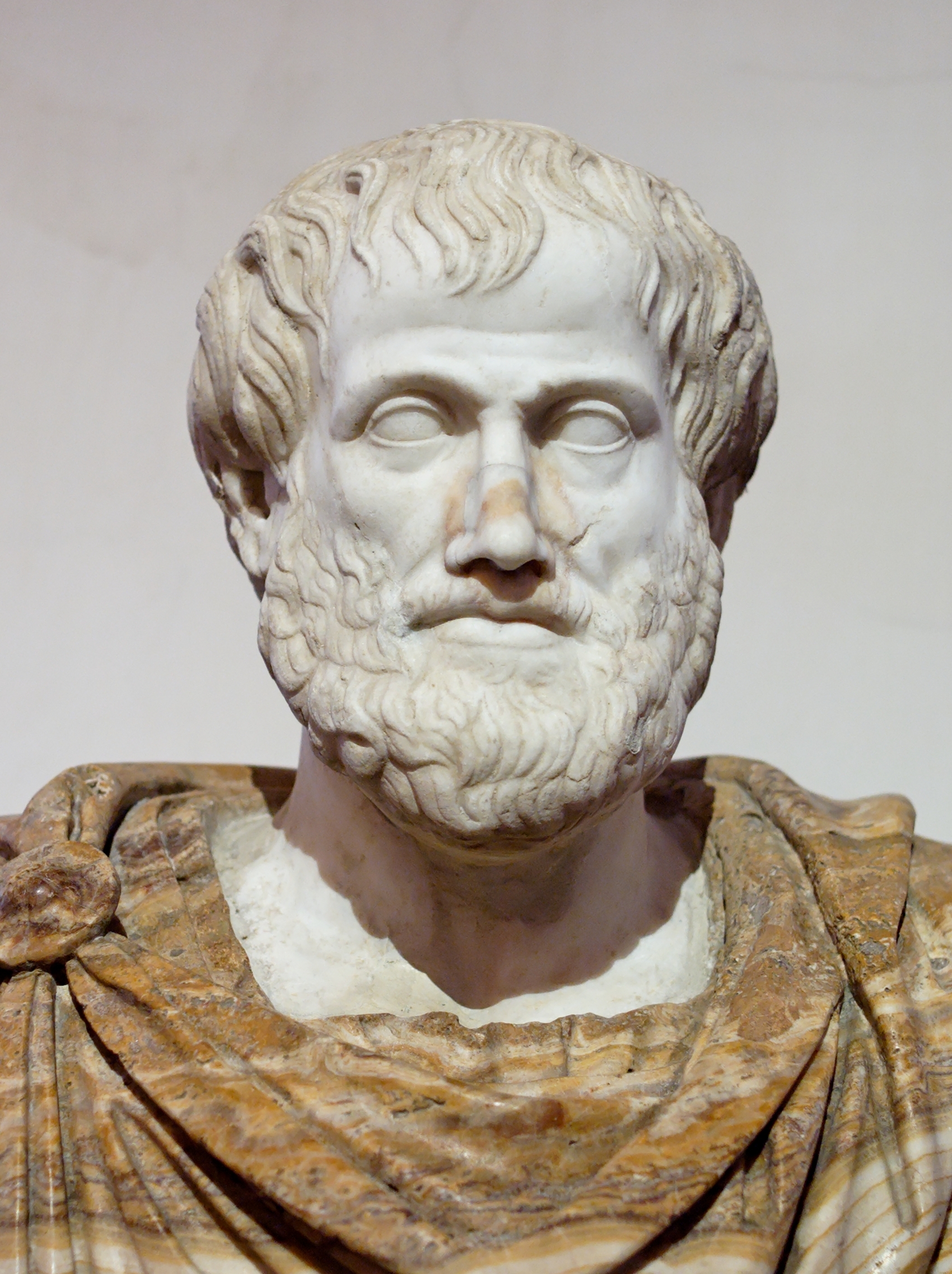
Before you read the Ethics, it helps to know who wrote it, what kind of text it actually is, and what Aristotle was trying to do with it.
Aristotle was born in 384 BCE in Stagira, a small Greek city on the northern coast of the Aegean. His father was a physician at the court of the king of Macedon, which mattered later in his life more than it probably did at the time. At seventeen he traveled to Athens and enrolled in Plato's Academy, the closest thing the ancient world had to a research university. He stayed there for twenty years.
That is a long time. Aristotle arrived as a student and left, in middle age, as one of the most accomplished philosophers in Athens. He left only because Plato died and the leadership of the Academy went to someone else. Aristotle took the loss as a signal to move on.
What he did next is one of the odd accidents of intellectual history. He took a job tutoring the thirteen-year-old son of the Macedonian king. The son was Alexander. A few years later, Alexander would set out to conquer the known world, and Aristotle would return to Athens to found his own school, the Lyceum.
The Lyceum was a different kind of place from the Academy. Plato's school had been oriented toward mathematics and the contemplation of abstract forms. Aristotle's was oriented toward observation. He and his students dissected animals, catalogued political constitutions, collected botanical specimens, and compiled data. If you want a shorthand for the difference: Plato looked up at the ideas; Aristotle looked around at the world.
When Alexander died in 323 BCE, there was a wave of anti-Macedonian sentiment in Athens, and Aristotle, who had been Alexander's tutor, became a target. He left the city, reportedly saying he would not let Athens "sin twice against philosophy" (Socrates had been executed in Athens seventy-six years earlier). He died the following year.
The Nicomachean Ethics is not a book Aristotle sat down and wrote the way we write books. It is almost certainly a set of lecture notes: Aristotle's notes, or notes taken by his students, later compiled and edited by someone else. The title most likely comes from Aristotle's son, Nicomachus, who is the probable editor.
This matters for how you read it. The Ethics does not have the polished architecture of a piece of writing designed for an outside audience. It has the looser rhythm of a working scholar talking through a problem with students who already know some of the vocabulary. Arguments are sometimes stated in shorthand. Definitions are sometimes refined three or four pages after they are first introduced. Aristotle will raise an objection, set it aside, and pick it up a chapter later.
Do not let this throw you. The core argument of the Ethics is tightly structured and worth the work. But expect the texture to feel less like a treatise and more like a lecture in progress.
Aristotle is a teleological thinker. The word comes from the Greek telos, meaning end, goal, or purpose. Aristotle believes every living thing has a purpose built into its nature, the way a seed has the oak tree built into it. Acorns are not oak trees yet, but acorns are for becoming oak trees. If you want to understand an acorn, you have to understand what it is aiming at.
He applies the same framework to human beings. If there is a human telos (a distinctive activity or function that makes us the kind of creatures we are), then the good life for a human being is the life that fulfills that purpose well. This is the move that the opening chapters of Book I build toward.
You do not need to share this worldview to read Aristotle carefully. Modern biology does not talk about purposes the way Aristotle does, and many contemporary philosophers are skeptical of teleology in ethics. But the argument Aristotle builds on top of the teleological picture is worth engaging on its own terms, and you need to see the picture clearly to follow what he is doing.
TERM TO KNOW
Telos (Greek): end, goal, or purpose. Aristotle's ethics assumes that human beings have a natural end that we can flourish or fail to achieve. When he asks what the human good is, he is asking what our telos is.
This short video gives additional background on Aristotle's life and place in the history of philosophy. Watch it before moving on to Book I.
The three books we are reading hang together as a single argument, but each has its own question.
Book I asks: what is the final end of human life? Aristotle argues that there must be some ultimate end we aim at for its own sake, and that this end is eudaimonia. He then argues, using the function argument, that eudaimonia is activity of the soul in accordance with virtue.
Book II asks: what is a virtue, and how do we get one? Aristotle's answer is that virtues are stable dispositions of character, acquired by practice rather than by instruction, and that each virtue is a mean between two vices.
Book III (we are reading chapters 1–5) asks: when are we responsible for what we do? Aristotle distinguishes voluntary from involuntary action, discusses how ignorance and compulsion excuse, and sets out his account of choice as deliberated desire.
Read each book slowly, but do not get stuck on the first difficulty. Aristotle often restates a point in different words a few paragraphs later. If chapter 2 is opaque, keep going: chapter 3 may clear it up.