Mill's Life and Context
A Victorian polymath who turned his father's utilitarianism into something more livable
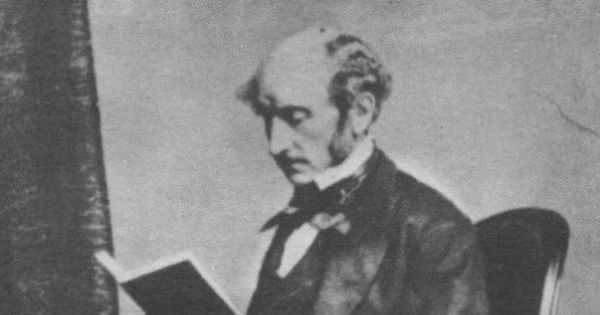
Mill's life was a long argument with the system he was raised in.
John Stuart Mill (1806–1873) was raised by his father, James Mill, as an experiment in the philosophical education of a single child. The result was the most precocious intellectual upbringing in nineteenth-century Britain, and possibly anywhere. By age three Mill was reading Greek. By eight he had read most of Plato's dialogues in the original. By twelve he had been put through formal logic and political economy. By his early teens he was reading manuscript drafts of his father's books and helping with the editing.
This was not random precocity. James Mill and his close friend Jeremy Bentham wanted to demonstrate that the right kind of education could produce a fully rational adult, ready to carry forward the reformist project they called Philosophic Radicalism. The younger Mill was their test case. He passed by every external measure: a stellar career at the East India Company, a long list of books and essays, and, eventually, a seat in Parliament.
The internal cost was severe. At twenty, Mill suffered what he later called a "mental crisis": a deep depression in which the goals he had been raised to pursue no longer felt worth pursuing. He came out of it gradually, helped by the poetry of Wordsworth, conversation with people his father would have considered intellectually frivolous, and his own slow recognition that he had been taught to reason but not to feel. The experience permanently altered his sense of what a good human life requires. It also altered his utilitarianism. Bentham had thought all pleasures were of the same kind, differing only in quantity. Mill, after the breakdown, became convinced that some kinds of pleasure are qualitatively higher than others, and that a utilitarianism worth defending would have to recognize this.
In 1830 he met Harriet Taylor, an intellectually formidable woman who was unhappily married. For two decades they conducted a deep but officially platonic relationship that scandalized Mill's social circle. After her husband's death in 1849 they finally married. Harriet Taylor Mill died in 1858, just three years later. Mill spent the rest of his life publishing the works they had planned together, including On Liberty, Utilitarianism, and The Subjection of Women. He always credited her as a co-author, more emphatically than his contemporaries believed her contributions warranted; some recent scholarship has come around to thinking he was probably right.
Mill is the first thinker in this course who lived after the Industrial Revolution, and you can feel it in his work. Aristotle wrote for citizens of a small Greek city. Aquinas wrote for an educated clergy in medieval Christendom. Kant wrote in a Prussian university town that, by his own admission, had not changed much in centuries. Mill writes from the center of the world's first industrial society, in the middle of arguments about poverty, factory conditions, women's rights, colonial administration, and electoral reform. Ethics, for him, is not an academic exercise. It is the framework you need to make political decisions in a country that is changing faster than its inherited moral vocabulary can describe.
This is one of the reasons Mill is so concerned with applicability. He wants a moral theory that you can actually use to decide between policies, to evaluate institutions, to weigh competing demands. Kant's categorical imperative, on his view, is too thin to do this work; it gives you a check on certain kinds of action (no lying, no false promising) but no way to compare two policies neither of which involves any lying at all. Utilitarianism, Mill thinks, provides what you need: a common measure (happiness) by which any policy can be assessed, and a clear test (does it produce more happiness than the alternatives?) that anyone can apply.
The intellectual setting also matters. Mill is writing in the wake of Bentham, in conversation with Coleridge and the German romantics, and against the backdrop of a rapidly developing British empiricist tradition. His own great work in logic and epistemology, the System of Logic (1843), is an attempt to ground all human knowledge in inductive methods drawn from the natural sciences. Utilitarianism is the moral application of that broader empiricist program. If knowledge of the world comes from observation and inference, then moral knowledge must come from observation of what makes lives go well or badly, and inference from there to general principles. There is no separate moral faculty, no innate principles given in advance. Whatever morality is, it has to be something we discover by attending to creatures like us in the world we actually inhabit.
The book has a deliberately defensive shape. Mill wrote it in the early 1860s, by which point utilitarianism had been around for two generations and had attracted a long list of criticisms. Some of the objections were philosophical (utilitarianism cannot account for justice; the principle of utility cannot be proved; happiness is not the kind of thing moral theory should track). Some were polemical (utilitarianism is a doctrine fit only for swine; it makes you cold and calculating; it reduces moral seriousness to bookkeeping). Mill wants to answer all of them in a short book aimed at general readers.
The result is a book that does several things at once. It states the Greatest Happiness Principle and tries to make it precise. It responds to a series of standard objections and tries to defuse them. It offers a famous "proof" of the principle of utility. And it ends with an extended treatment of justice, partly because justice is where consequentialist theories are most often thought to fail. Each chapter has its own job, and the chapters are not quite the same kind of argument.
Reading the book well means tracking what Mill is doing in each chapter rather than expecting a single linear argument. Chapter 1 sets up the project. Chapter 2 is the substantive core: this is where utilitarianism gets defined and most of the work gets done. Chapters 3 and 4 are detours into supporting questions (motivation, then proof). Chapter 5 is the longest chapter and works through the most resistant case, justice.
This short video covers Mill's biography and place in the history of philosophy. Watch it before starting on Chapter 1.
Here is what to expect in each chapter.
Chapter 1: General Remarks. A short preface. Mill explains why moral philosophy has made so little progress despite millennia of effort, sets up the question he will try to answer, and acknowledges that he cannot offer a strict logical proof of any moral principle. Skim this chapter on a first pass; the substantive work begins in Chapter 2.
Chapter 2: What Utilitarianism Is. The heart of the book. Mill states the Greatest Happiness Principle, distinguishes higher and lower pleasures, and works through the main objections to utilitarianism: that it is a doctrine fit for swine, that happiness is not the right standard, that we cannot calculate consequences, that it makes morality too demanding, and so on. If you read carefully nowhere else in the book, read carefully here.
Chapter 3: Of the Ultimate Sanction of the Principle of Utility. Mill turns from what is right to what motivates people to do right. His answer distinguishes external sanctions (legal penalties, social pressure, divine sanction) from internal sanctions (conscience, sympathy). He argues that the internal sanctions are what really do the moral work, and that they are rooted in human sociability rather than in any rational insight.
Chapter 4: Of What Sort of Proof the Principle of Utility Is Susceptible. Mill's notorious "proof." He concedes that the principle of utility cannot be proven in the strict logical sense but claims he can offer something close to a proof. The argument he gives has been controversial since the day the book was published; one specific move in it is almost universally regarded as a serious error, and we will spend some time on that move in the lecture page.
Chapter 5: Of the Connexion Between Justice and Utility. The longest and most substantial chapter. Mill takes up the hardest case for any consequentialist theory: justice. Why does it feel wrong to frame an innocent person even when doing so would maximize happiness? Why do rights feel like absolute claims rather than rules of thumb? Mill's answer is that justice is a special class of utility, marked off by particularly strong feelings of resentment when it is violated. Whether his answer succeeds is one of the great debates in modern ethics.