Unit 1: Overview
Aristotle: Virtue, the Good Life, and What We Owe Our Own Character
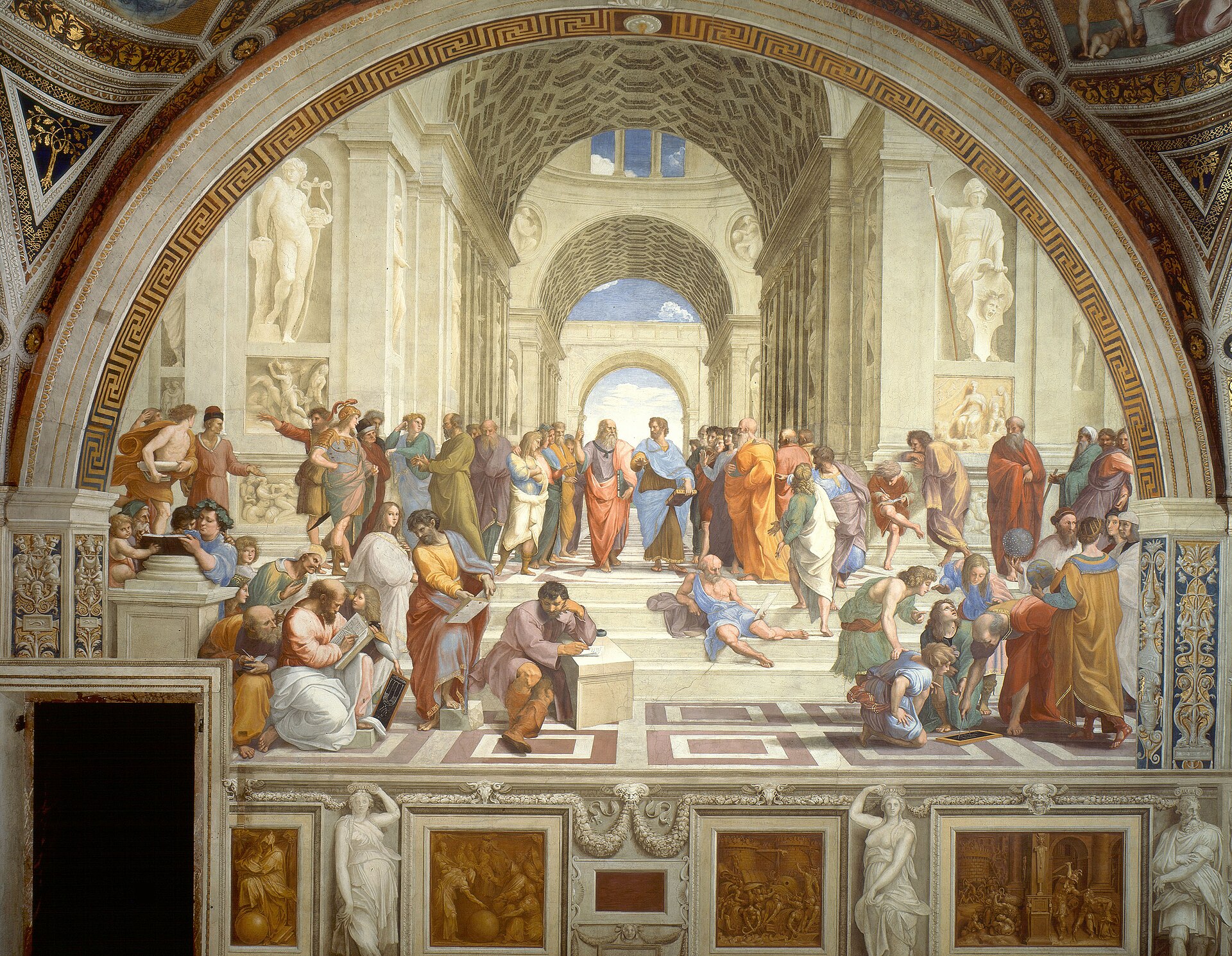
The oldest systematic ethics in the Western tradition, and still one of the sharpest. Aristotle wants to know what a good human life looks like, and he thinks the answer runs through character.
Ask anyone what they want out of life and, sooner or later, you will hear some version of the same answer: to be happy. Aristotle thinks this answer is correct as far as it goes, but he does not think most people know what they are talking about when they say it. Most of us treat happiness as a feeling, or a run of good luck, or the result of getting what we want. Aristotle argues that happiness, properly understood, is none of these things. It is an activity: the activity of a human being living well, over the course of a whole life, by exercising the capacities that make us the kind of creature we are.
That is the heart of the Nicomachean Ethics. In Book I, Aristotle asks what the final goal of human life is and argues his way to the concept of eudaimonia, usually translated as "happiness" or "flourishing." In Book II, he argues that eudaimonia is achieved through virtue, and that virtues are habits of character acquired by practice, not gifts of nature or lessons we can simply be taught. In Book III, he turns to the conditions under which we hold people responsible for what they do, distinguishing voluntary action from involuntary action and setting out his account of choice.
These are not museum pieces. The questions Aristotle is asking are still the questions we ask when we think about what kind of person we want to become, which actions we are on the hook for, and what it would mean to live a life we could look back on without regret.
LOOKING AHEAD →
Aristotle grounds ethics in human nature: morality emerges from what we are and what we are for. Every thinker after him in this course is, in some sense, responding to that move. Aquinas will inherit it and baptize it; Kant will replace it with reason; Mill will replace it with consequences; Nietzsche will try to tear it down; de Beauvoir will ask what ethics looks like when there is no fixed human nature to ground it in.
Aristotle is not a difficult writer in the way Kant is. His sentences are mostly short and direct. What makes him hard for modern readers is that he assumes a way of thinking about the world that we no longer share: a world in which every living thing has a purpose built into its nature, and in which asking what a thing is for is as natural as asking what it is made of.
You do not need to accept this worldview to read Aristotle carefully. But it helps to notice when he is using it, because the bulk of his argument depends on it.
The readings in this unit come from the Nicomachean Ethics, most likely named after his son Nicomachus, who may have edited the lecture notes after Aristotle's death. That is what you are reading: lecture notes, not a polished book. Expect the prose to feel like notes in places. Expect Aristotle to circle back to a point rather than state it cleanly the first time.
READING TIP
Read each book once quickly, then again more slowly. The first pass is to get the shape of the argument. The second pass is where the work gets done. Do not take notes on the first pass; you will waste time on sentences that turn out to be minor.
By the end of this unit, you should be able to:
- Explain what Aristotle means by eudaimonia and why he thinks it is the final end of human life.
- Reconstruct Aristotle's function argument (the ergon argument) for the human good.
- Describe what a virtue is, in Aristotle's account, and explain the difference between intellectual and moral virtue.
- Apply the doctrine of the mean to a concrete virtue, identifying its flanking vices of excess and deficiency.
- Explain what makes an action voluntary or involuntary on Aristotle's account, and how ignorance and compulsion excuse.
- Evaluate Aristotle's claim that virtue is acquired through habituation rather than instruction.
All readings for this unit come from Aristotle's Nicomachean Ethics, translated by W. D. Ross. The full text is in the public domain and free to read online. Each link below opens one book.
- Book I — The human good and eudaimonia
- Book II — Moral virtue and the doctrine of the mean
- Book III — Voluntary action, choice, and moral responsibility (chapters 1–5)
Read each book before its lecture page in this unit.
ATTRIBUTION
Aristotle, Nicomachean Ethics, translated by W. D. Ross. Public domain. Source text from the MIT Internet Classics Archive.
What you need to complete this unit
Work through each item in order.
- Read the lesson pages in this unit and watch the lecture videos on them
- Read the assigned text (see Readings above)
- Complete the reflection prompt
- Take the unit quiz
ACCESSIBILITY
If any material in this unit is not accessible to you, please contact me by email right away. I will work with you to find a solution.
In This Unit
- Aristotle's Life and Context
- Nicomachean Ethics, Book I
- Nicomachean Ethics, Book II
- Nicomachean Ethics, Book III
- Reflection Prompt
- Quiz: Aristotle