Unit 5: Overview
What if the ideas you live by aren’t really yours — but belong to the system that benefits from you believing them?
This page is organized into five sections. Click any heading to open it — you can have multiple sections open at once.
What this unit is about
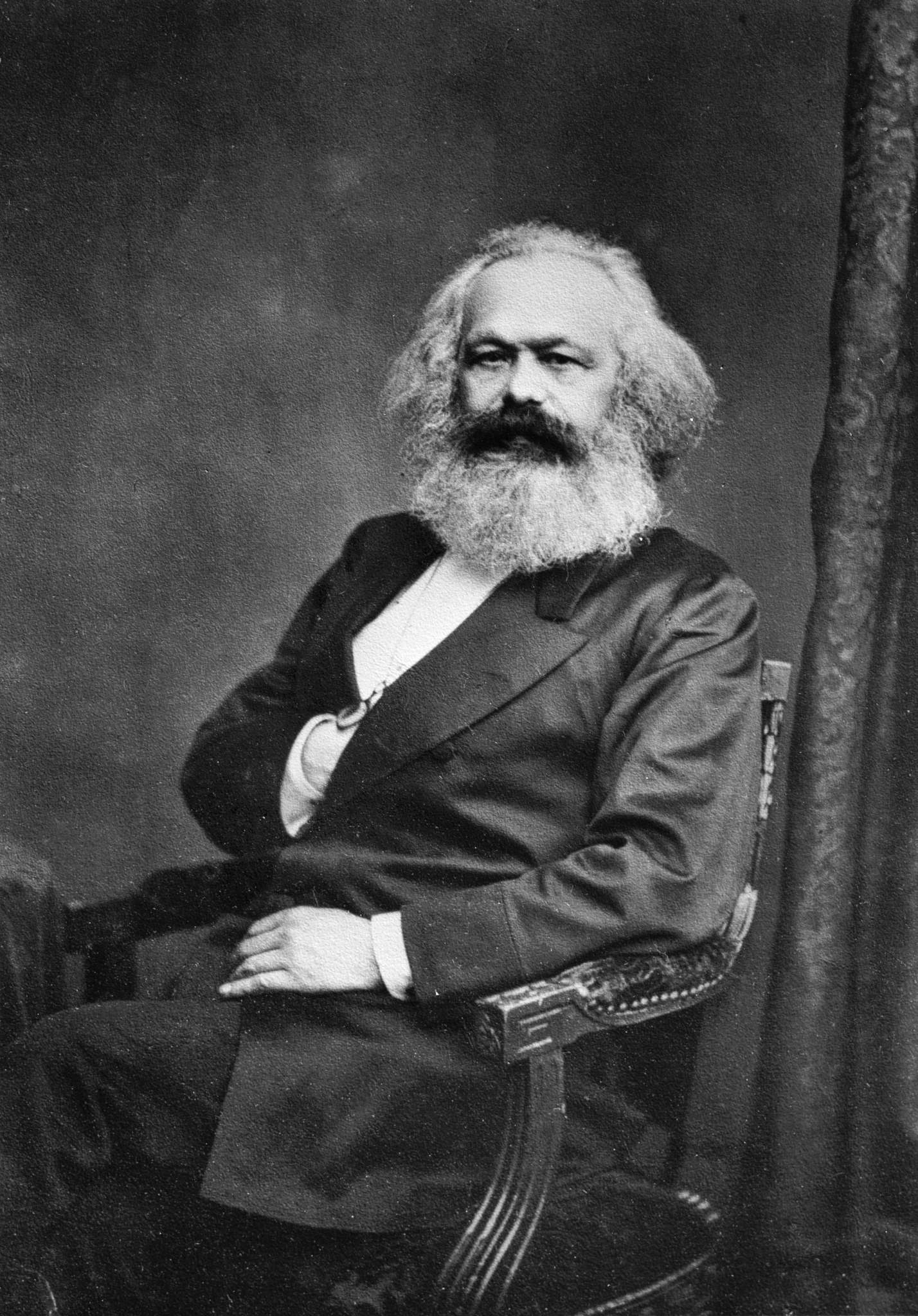
Before we begin, a word about where you’re starting from. If you arrived here thinking you already know what to make of Karl Marx — either that he was a prophet who exposed the fundamental injustice of capitalism, or that he was the intellectual architect of some of the twentieth century’s worst regimes — you are in good company. Marx provokes strong reactions, and those reactions tend to arrive before the reading does.
This unit will ask you to set that aside, temporarily, and approach Marx the way you have approached every philosopher in this course: as someone making an argument. What are his premises? Do they hold up? What does his conclusion actually say — not what later movements said in his name, but what the text in front of you says? Philosophy requires that kind of careful attention, and it is especially important here, where the subject matter is charged enough that it’s easy to react without reading.
With that said: Marx is one of the most consequential thinkers in modern history. His influence on economics, sociology, political theory, and philosophy is staggering. You do not have to agree with him to benefit enormously from understanding him. And understanding him — really understanding him — requires engaging with his actual arguments, not with the caricatures that tend to pass for him in public debate.
The shape of the argument
Marx begins from a question that is still worth asking: why do societies look the way they do? Why do some people command vast wealth and others work themselves to exhaustion for wages that barely cover their needs? Why do the ideas that circulate in a society — about justice, freedom, merit, the natural order of things — so often turn out to benefit those already at the top?
Marx’s answer is structural. It is not primarily about the greed of bad people or the failures of individuals. It is about the way economic systems organize human relationships, and the way those relationships shape everything else: politics, law, religion, culture, and even the way people think about themselves. The system, he argues, doesn’t just distribute wealth unequally — it produces the ideas that make that unequal distribution seem natural, inevitable, or just.
The reading for this unit is the Communist Manifesto, co-written with Friedrich Engels in 1848. It is a short, fierce, brilliantly written document — one of the most widely read texts in modern history. It is also a philosophical text: it makes claims about the nature of history, the structure of capitalism, and the conditions for human freedom that deserve to be examined carefully, not just accepted or rejected on the basis of what they seem to threaten or promise.
The lecture pages will help you work through the argument section by section. By the end of the unit, you should be able to explain what Marx actually claimed — which is the necessary first step before deciding what you think of it.
← Looking back | Looking ahead →
In Unit 4, Hegel argued that history is the unfolding of Reason — that Spirit moves through time, realizing freedom in ever more adequate forms. He gave philosophy its grandest possible ambition: to comprehend the whole of human history as a rational process. Marx was a student of Hegel’s legacy, and he took the historical framework seriously. But he thought Hegel had it precisely backwards.
In Unit 6, Sartre will face the aftermath. If Marx is right that our values and beliefs are shaped by material conditions we did not choose, then in what sense are we free? Sartre’s existentialism is in part a response to this question — an insistence on radical freedom even in conditions that seem to foreclose it.
Before you read: watch this first
The Manifesto is more readable than Hegel, but it moves fast and assumes familiarity with mid-nineteenth century European politics and economics. This video introduces the key ideas — historical materialism, class struggle, the critique of capitalism — in plain terms before you encounter them in the text. It will give you a framework to hang the details on as you read.
Stuart Hall, "Marx and Marxism" (~52 min). Captions available on YouTube.
Note on the video
Stuart Hall presents Marx sympathetically, which is not the same as presenting him uncritically. The lecture pages will complement the video by working through the argument more carefully and raising some of the questions the video doesn’t have time for.
By the end of this unit, you should be able to
Download before you read
This PDF is designed to be used alongside the reading. It maps the structure of the Manifesto and gives you a framework for tracking the argument across all four sections. Download it before you begin.
Read the full text of the Communist Manifesto online: marxists.org
Accessibility
If you use a screen reader or require an alternative format for any of these documents, please contact your instructor. All course materials can be made available in an accessible format upon request.
What you need to complete this unit
Work through each item in order.
- Watch the introductory video
- Read the lesson pages in this unit
- Read the assigned text and review the handouts
- Complete the reflection prompt
- Take the unit quiz
In This Unit
- Marx's Life and Context
- Class Struggle and Historical Materialism
- The Manifesto: Argument and Program
- Ideology, Alienation, and What Marx Got Right (and Wrong)
- Reflection Prompt
- Quiz: Karl Marx