Impressions, Ideas, and Association
Sections 1–3: The building blocks of the mind, and how it connects them.
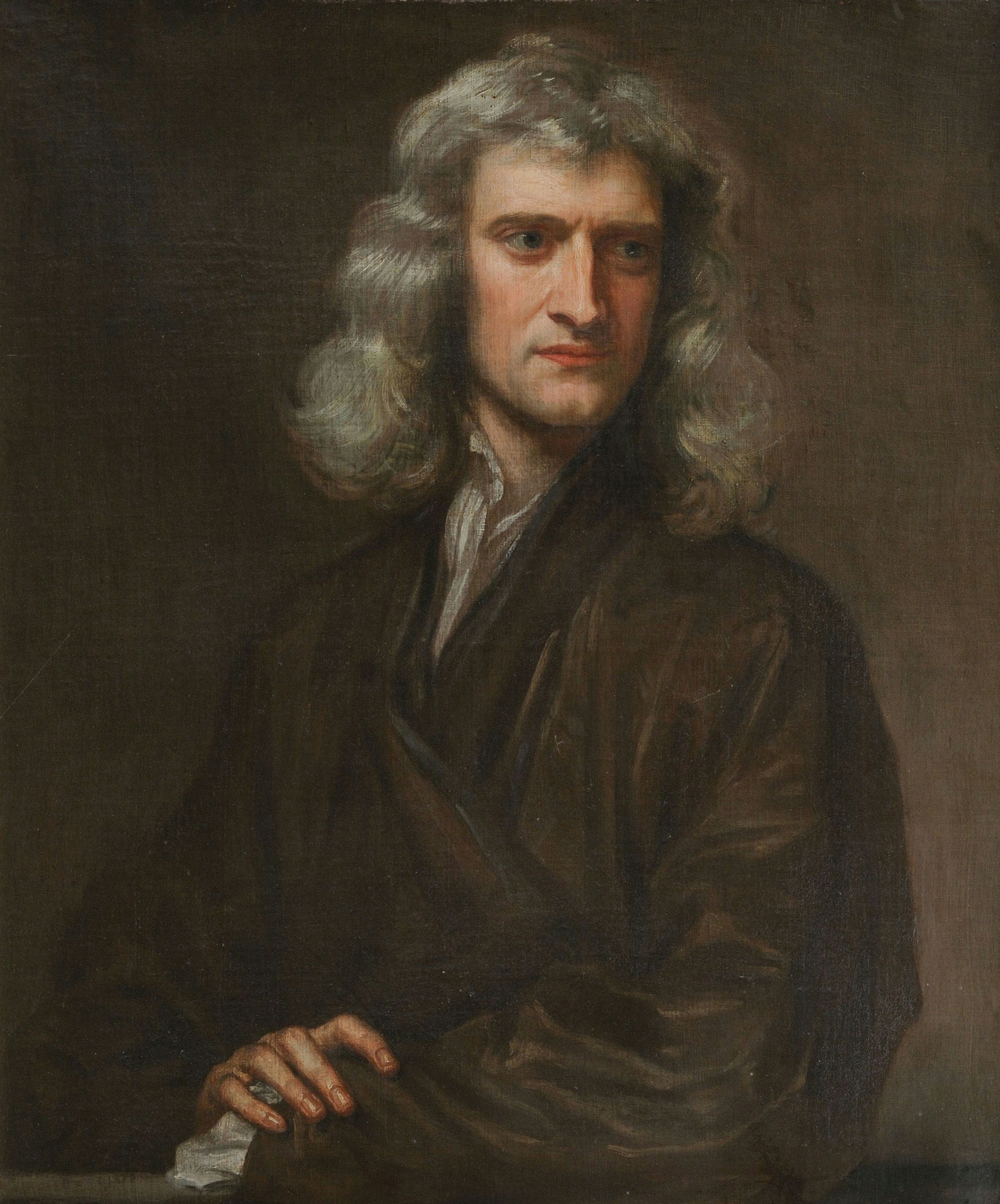
This page covers four sections: Section 1 of the Enquiry, the impressions/ideas distinction, the Copy Principle, and the three laws of association. Click any heading to open it.
Enquiry, Section 1
Hume opens the Enquiry by distinguishing two kinds of philosophy. One is what we might call moral philosophy — practical, literary, concerned with life as we live it, written to improve conduct and cultivate taste. The other is abstruse philosophy — rigorous, systematic, technical, aimed at understanding the principles underlying all human thought.
Hume prefers the rigorous kind, but not for snobbish reasons. He thinks accurate philosophy is necessary precisely to protect ordinary life from two dangers: the pretensions of speculative metaphysicians who claim more than they can possibly know, and the attacks of skeptics who try to undermine knowledge entirely. The only way to respond to either threat is to understand the mind’s actual capacities and limits with precision.
This is Hume’s project in the Enquiry: a kind of anatomy of the human understanding. He wants to map exactly what the mind can do, what it cannot do, and why. Newton had mapped the laws governing bodies in motion; Hume wants to map the laws governing the mind in thought. The analogy is deliberate.
Context: Newton’s century
Hume was writing in the shadow of Isaac Newton, whose Principia Mathematica (1687) had transformed the understanding of the physical world. If Newton could explain the motion of planets with a handful of laws, Hume asked, why couldn’t someone do the same for the human mind? The ambition is enormous — and the results, as you will see, are rather more unsettling than Newton’s.
The basic inventory of the mind
Hume begins with a distinction that seems obvious once stated but does real philosophical work: everything the mind contains is either an impression or an idea.
Impressions are the immediate, forceful deliverances of experience. When you feel pain, hear a loud sound, taste something bitter, or feel the warmth of a fire — these are impressions. They are vivid, present, direct. They include not just sensory experiences but passions and emotions as well: grief, joy, anger. What they have in common is force and liveliness.
Ideas are the mind’s copies of impressions. When you remember a pain, imagine a sound you’ve heard before, or think about warmth without currently feeling it — these are ideas. They are fainter, less vivid, less present. They retain the content of the impression but not its force.
The difference, Hume says, is mainly a matter of vivacity. Impressions strike us forcefully; ideas are their dimmer echoes. In unusual cases the line can blur — a vivid dream can feel like an impression, and an intense emotional memory can have something of the force of the original feeling. But in general, the distinction holds.
Simple and complex
Both impressions and ideas can be either simple or complex. A simple impression is a single, irreducible experience — a pure sensation of a particular shade of red, say. A complex impression combines several simpler ones: the experience of looking at an apple involves impressions of color, shape, texture, and perhaps smell, all at once.
Complex ideas can be built from simple ones in ways that go beyond any individual experience. You have never seen a golden mountain — but you have the idea of gold and the idea of a mountain, and you can combine them. This creative power of the mind is real, but it is constrained: the raw material always comes from impressions.
The Copy Principle
This brings us to what is sometimes called Hume’s Copy Principle: every simple idea is a copy of a corresponding simple impression. The idea of red copies an impression of red. The idea of pain copies an impression of pain. No simple idea without a prior simple impression from which it is copied.
The Copy Principle is Hume’s main philosophical tool. Whenever a philosopher claims to be talking about some idea — substance, necessary connection, the self, the soul — Hume asks: what impression does it copy? If the answer is “none,” then the supposed idea is either an illegitimate combination of simpler ideas or, worse, an empty word masquerading as a concept.
Applying the Copy Principle:
What is the idea of “God”? Hume’s answer: a complex idea assembled from simpler ones — perfect goodness (an amplification of our impression of ordinary goodness), infinite knowledge (an extension of our impression of our own limited understanding), and so on. The idea of God is not derived from a direct impression of God but constructed by the mind from materials it has experienced. This doesn’t prove God doesn’t exist — but it does show that our idea of God is a human mental construction, not a direct experience.
Logic connection → Logic Reference
The Copy Principle functions as a criterion for meaningful concepts — a test for whether a philosophical term actually refers to anything. In Unit 1, we saw Socrates pressing Euthyphro to explain what he meant by “piety”; Hume is doing something structurally similar but from a different angle. Rather than asking for a definition, he asks: show me the experience that gives rise to this concept. Both are ways of demanding that a term do real intellectual work, not just produce the feeling of understanding.
How the mind connects ideas
The mind doesn’t hold its ideas in isolation. They associate — one thought leads to another, memories follow related memories, the mind moves through ideas in characteristic patterns. Hume wants to explain why.
His answer: there are exactly three principles that govern the association of ideas. These are not arbitrary habits; they are, Hume thinks, the fundamental laws of mental connection. Everything the imagination does when it wanders from one idea to another can be traced back to one of these three.
1. Resemblance
A picture of a person makes you think of the person. A song reminds you of someone who used to play it. Ideas that resemble one another tend to draw each other to mind. The principle is simple: the mind moves easily from one idea to a similar one.
2. Contiguity
Mentioning one room in a house makes you think of the adjacent rooms. Thinking of a city makes you think of the street you used to live on. Ideas that are close to one another in space or time tend to associate. Contiguity — nearness — is a second glue that holds ideas together.
3. Cause and Effect
Thinking of a wound makes you think of the pain that followed. Thinking of a match makes you think of fire. The idea of a cause calls up the idea of its effect, and vice versa. This is the strongest and most pervasive of the three principles — and it is the one Hume will subject to the most searching scrutiny in Section 4.
The ambition
Three laws to govern the entire motion of the mind — the parallel to Newton’s three laws of motion is unmistakable and deliberate. Whether Hume succeeds is another matter. But the aspiration is to give mental life the same kind of systematic, law-governed explanation that Newton gave to physical nature.
What the laws don’t settle
Notice that Hume is describing these as laws of how the mind connects ideas — not as facts about the world. The association of cause and effect tells us something about how our minds work, not about whether causation is a real feature of reality. That question is left open here. Section 4 will try to answer it, and the answer will be unsettling.
Looking ahead → Sections 4–5
The third principle of association — cause and effect — is about to receive Hume’s full attention. He has just told you that the mind naturally and inevitably moves from the idea of a cause to the idea of its effect. In Section 4, he will ask: but is that mental habit justified? Is there any rational basis for it? The answer will reframe everything you thought you knew about knowledge, science, and the reliability of experience.
Questions to hold while you read Sections 1–3
These are not questions with simple answers. They are designed to sharpen your attention to what Hume is actually doing.
— Hume says the difference between impressions and ideas is one of vivacity. Is that a satisfying distinction? Could you have a very vivid idea that crossed into impression territory? What would follow if you could?
— The Copy Principle says every simple idea traces back to an impression. Can you think of any counterexamples — any idea that seems to have no corresponding sensory experience? Hume discusses one potential counterexample (a missing shade of blue) and tries to defuse it. Is his response convincing?
— Hume claims there are exactly three principles of association. Does that seem complete? Can you think of a way one idea leads to another that doesn’t fit resemblance, contiguity, or cause and effect?
— Notice how Hume’s project compares to Descartes’. Descartes started from doubt and tried to rebuild certainty. Hume starts from experience and tries to explain everything the mind does without appealing to reason alone. What does each approach gain? What does each risk?
Carry this forward
Before moving to the next lecture page, make sure you can answer in your own words: What is the difference between an impression and an idea? What does the Copy Principle say, and why does it matter? What are the three laws of association, and what are they laws of (the world, or the mind)? These are the foundations for everything in Sections 4 and 5.