Unit 4: Overview
What if history isn’t just one thing after another — but reason working itself out in time?
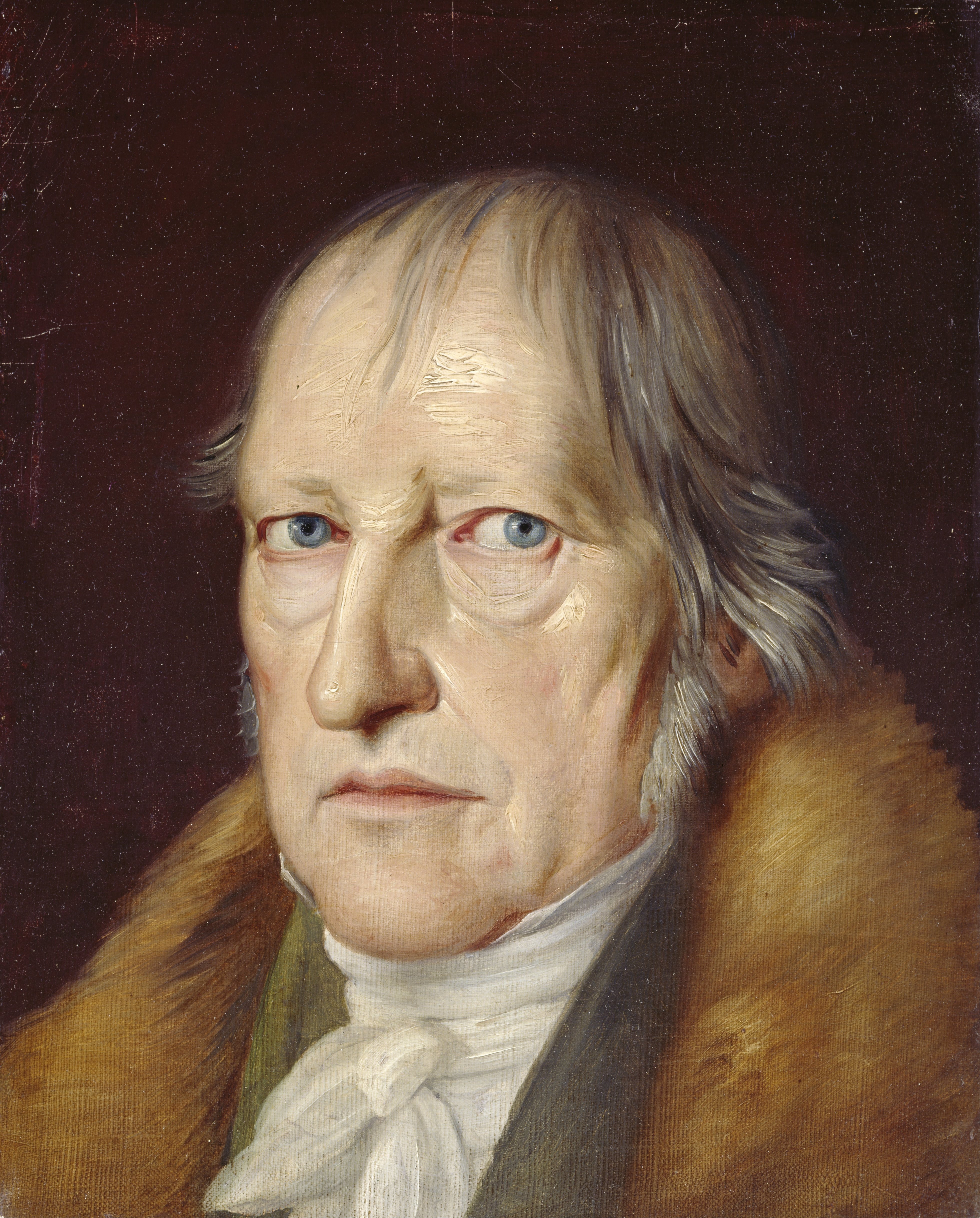
This page is organized into five sections. Click any heading to open it — you can have multiple sections open at once.
What this unit is about
Here is a question that is easy to ask and surprisingly hard to answer: does history go anywhere? Not just forward in time — everything goes forward in time — but somewhere. Does it have a direction? A point? Is there a logic to why civilizations rise and fall, why ideas spread and transform, why things turn out the way they do?
Most people operate with a quiet sense that history is a muddle — one thing after another, driven by accident, ambition, disease, and luck. Georg Wilhelm Friedrich Hegel thought this view was profoundly wrong. History, he argued, is the unfolding of Reason itself — not the neat logical reasoning of a geometry proof, but something deeper: a process by which the world comes to understand itself, through the struggles and transformations of human civilization.
This is a large claim. It is also, once you get inside it, a genuinely strange and powerful one. Hegel is widely considered one of the most difficult philosophers to read — and one of the most important. His ideas shaped the entire nineteenth century, and their influence runs directly through the two philosophers who follow him in this course: Marx, who took Hegel’s framework and turned it toward economics and class struggle; and Sartre, who inherited the wreckage after both Hegel’s grand historical narrative and Marx’s political project had been shaken to their foundations.
The shape of the argument
Hegel begins from a striking premise: the rational is real, and the real is rational. This sounds like a slogan, and Hegel’s critics have certainly treated it as one. But he means something specific by it. The world is not just stuff happening — it has a structure that reason can uncover. And reason is not just something that happens in individual minds — it is working itself out in history, through conflict, contradiction, and resolution.
The engine of this process is what Hegel calls the dialectic: the idea that development happens through contradiction. Any idea, institution, or historical moment contains tensions within it. Those tensions generate opposition. And from the conflict between the original position and its opposition, something new emerges — something that preserves what was true in both while transcending their limitations. History, for Hegel, is this process playing out on the largest possible scale.
At the center of Hegel’s account is Geist — a German word usually translated as “Spirit” or “Mind.” Geist is not God, and it is not any individual human consciousness. It is something like the collective self-understanding of humanity, developing over time. The goal of history, on Hegel’s account, is the full realization of freedom — the point at which Geist knows itself completely, and human beings live in a society that reflects that knowledge.
The reading for this unit — the Introduction to the Philosophy of History — is where Hegel lays all of this out. It is not easy. But the lecture pages are designed to help you work through it, and what you find on the other side is worth the effort.
← Looking back | Looking ahead →
In Unit 3, Hume demolished the idea that reason can reach beyond experience. Causation, induction, the self — none of these, he argued, can be rationally justified; they are products of habit and custom. Kant responded by arguing that the mind actively structures experience rather than passively receiving it — which saved certain kinds of knowledge but left reason confined within the boundaries of possible experience.
Hegel thought Kant hadn’t gone far enough. In Unit 4, he will argue that the division between mind and world, between reason and reality, is itself a mistake — a false separation that philosophy must overcome. In Unit 5, Marx will take Hegel’s historical framework and demand that it be brought down to earth: not Spirit realizing itself, but material conditions and class conflict driving history forward.
Before you read: watch this first
Hegel is notorious for being difficult to read on a first pass — not because his ideas are obscure, but because his vocabulary is unfamiliar and his sentences are long and nested. This video introduces the key concepts before you encounter them in the text: the dialectic, Geist, the philosophy of history, and the connection to Marx. It will make the reading significantly more manageable.
The School of Life: “Hegel” (~7 min). A clear introduction to Hegel's key ideas before you encounter them in the readings.
Note on the video
The School of Life video gives a helpful overview of Hegel’s main ideas. Where it simplifies or moves quickly, the lecture pages will fill in the details. The video and the pages are designed to work together — you don’t need to choose between them.
What you are reading and why
The assigned text is the Introduction to Hegel’s Philosophy of History, pp. 14–52 in the course PDF (Sibree translation). The Introduction proper begins mid-page 14, after a brief preface by Hegel’s son. The pages before it can be skipped.
This excerpt covers the three parts of the Introduction you most need to understand Hegel’s project:
Three methods of history (pp. 14–26) — Hegel opens by distinguishing Original history (eyewitness accounts like Thucydides), Reflective history (later synthesis and analysis), and Philosophical history (his own approach). This is the most accessible section; read it carefully as an entry point into how Hegel thinks.
Reason and Spirit in history (pp. 27–45) — The philosophical core. Hegel argues that Reason governs the world and that history is the process by which Spirit — the collective mind of humanity — comes to know itself. This section introduces the key concepts the lecture pages will unpack. It is dense; read slowly, and use the handouts alongside the text.
World-historical individuals (pp. 45–52) — Hegel’s famous account of figures like Napoleon, who seem to embody the spirit of their age and drive history forward. This section is more concrete and makes for good discussion material.
Reading tip
Hegel writes in long, winding sentences that can feel impenetrable at first. The strategy that works best: read for the main claim of each paragraph before worrying about the details. Ask yourself — what is he asserting here? The lecture pages will help you verify whether your reading is on track.
Handouts for this unit
These PDFs are designed to be used alongside the reading. Download them before you begin.
Accessibility
If you use a screen reader or require an alternative format for any of these documents, please contact your instructor. All course materials can be made available in an accessible format upon request.
What you need to complete this unit
Work through each item in order.
- Watch the introductory video
- Read the lesson pages in this unit
- Read the assigned text and review the handouts
- Complete the reflection prompt
- Take the unit quiz
In This Unit
- Hegel's Life and Context
- The Dialectic
- Reason, Spirit, and History
- Freedom, Progress, and the Limits of Hegel's Vision
- Reflection Prompt
- Quiz: G. W. F. Hegel