Unit 2: Overview
Can you know anything with absolute certainty? Descartes decided to find out.
This page is organized into five sections. Click any heading to open it — you can have multiple sections open at once.
What this unit is about
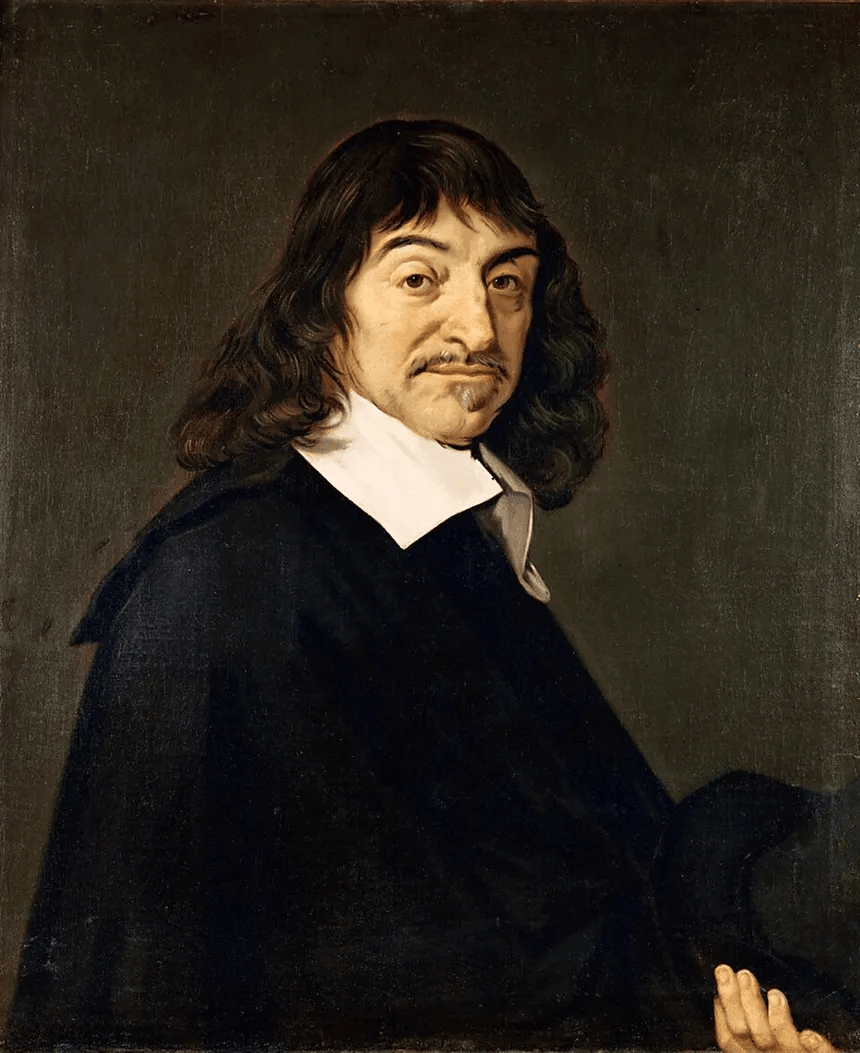
In 1641, a French philosopher named René Descartes published a short book that would reshape Western thought. The question driving it was deceptively simple: Is there anything I can know for certain? Not probably. Not usually. Certainly — beyond any possible doubt.
The Meditations on First Philosophy is the record of Descartes’ attempt to answer that question. Over six meditations, he strips away everything he has ever believed that could conceivably be wrong, searches for something that cannot be doubted, and then tries to rebuild knowledge on that foundation. What he finds — and what he builds from it — defines the terms of Western epistemology and metaphysics to this day.
The six meditations, in outline
Meditation I launches the project. Descartes asks: could my senses be deceiving me right now? Could I be dreaming? Could an evil demon be feeding me false experiences about a world that doesn’t exist? He deliberately drives doubt as far as it will go, until almost nothing is left standing.
Meditation II finds the one thing doubt cannot touch. Even if everything I believe about the world is wrong — even if there is an evil demon, even if I am dreaming — there is still something doing the doubting. Cogito ergo sum: I think, therefore I am. From this single certainty, Descartes begins the work of reconstruction.
Meditations III–V attempt to establish the existence of God as a guarantee that clear and distinct perception is reliable. If God exists and is not a deceiver, then the faculty of reason Descartes has been using is trustworthy. These meditations include two arguments for God’s existence — one from causation, one from the nature of the concept of God itself — and address a famous puzzle about whether Descartes’ reasoning is circular.
Meditation VI crosses the finish line. With God as guarantor, Descartes argues that the external world exists and that the mind and body are genuinely distinct substances. The mind is a thinking thing; the body is an extended thing; and they are, in some puzzling sense, joined. This conclusion — called substance dualism — will be contested, refined, and argued about for centuries after Descartes.
Why it matters
Descartes is often called the father of modern philosophy, and not just because he came early. He shifted philosophy’s central question from What is the world? to How do we know anything at all? That shift — from metaphysics to epistemology as the starting point — defines what comes after him. Hume, Hegel, and Kant are all, in different ways, responding to the problem Descartes identified.
← Looking back | Looking ahead →
In Unit 1, the Euthyphro raised the question of whether morality depends on divine authority. Descartes approaches the same relationship from the other direction: God guarantees not moral truth but rational truth — the reliability of reason itself. Ask yourself as you read: if God were necessary for reason to work, what would that mean for us now?
In Unit 3, David Hume will challenge the very faculty Descartes is trying to vindicate. Where Descartes relies on reason to establish what we can know, Hume will argue that reason alone tells us almost nothing — and that even cause and effect is just a habit of the mind.
Before you read: watch this first
The Meditations can feel disorienting on a first read because Descartes is doing something unusual: he is deliberately trying to break his own beliefs before rebuilding them. This video introduces the method of doubt and what Descartes is trying to accomplish before you encounter it in the text.
The School of Life: “Descartes” (~9 min). Captions available on YouTube.
Before you continue
Before you open the reading, take a moment: what do you think you know with absolute certainty? Write down two or three things. Then ask: could Descartes’ evil demon make any of them false? You’ll think about these differently once you have read Meditation I.
What to notice in the video
— Why Descartes thinks doubting the senses isn’t enough — he has to go further
— The difference between the Dream Argument and the Evil Demon hypothesis
— Why the cogito is supposed to survive even the most radical doubt
Unit reading
This unit has one text: the complete Meditations on First Philosophy. At about 50 pages in translation, it is the longest reading in the course — but it is structured to be read one meditation at a time, and each meditation is short. Plan to read it in at least two or three sittings, and in order.
Primary text
René Descartes, Meditations on First Philosophy
Trans. Jonathan Bennett — Early Modern Texts (free, openly accessible)
→ Download PDF (earlymoderntexts.com)A note on reading the Meditations
Descartes writes in first person, in a style he calls “meditation” — meaning he is narrating a process of inquiry, not delivering conclusions. The I in the text is a deliberate construction: a meditator stripping away assumptions. You are not being told what to think; you are invited to follow along and test each move yourself.
Descartes uses a technical phrase — clear and distinct perception — to describe the kind of certainty he is looking for. Pay attention to when and how he uses it. By Meditation VI, it does a lot of work.
Audio versions available
For audio versions of the Meditations, visit earlymoderntexts.com/authors/descartes. Audio files are available for each meditation individually.
Reading tip
Each meditation builds on the previous one. If you find yourself lost in Meditation III, the problem is almost certainly in something you missed in Meditation II. It is worth backtracking. The lecture pages for each meditation will help you identify the key moves before and after you read.
Handouts for this unit
These five PDFs accompany the reading, one for each meditation grouping. Download them before you begin — each one gives you the key concepts and questions to watch for in that part of the text.
Accessibility
If you use a screen reader or require an alternative format for any of these documents, please contact your instructor. All course materials can be made available in an accessible format upon request.
What you need to complete this unit
Work through each item in order.
- Watch the introductory video
- Read the lesson pages in this unit
- Read the assigned text and review the handouts
- Complete the reflection prompt
- Take the unit quiz
In This Unit
- Descartes' Life and Context
- Meditation I - The Method of Doubt
- Meditation II - The Cogito
- Meditation III-V - God and the Guarantee of Reason
- Cogito Ergo Sum
- Reflection Prompt
- Quiz: René Descartes